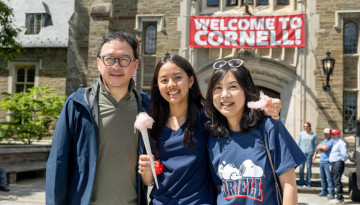
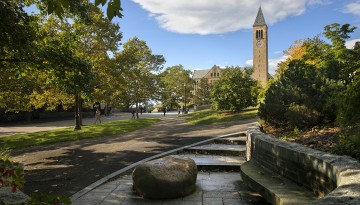
The 3,681 first-year students and 603 transfers who begin moving to campus Aug. 17, hail from 49 states plus Washington, D.C., Puerto Rico and American Samoa, and 62 countries.
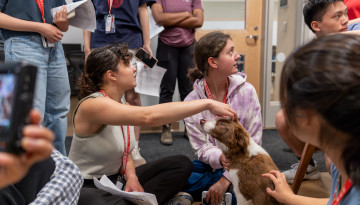
Through a partnership between Cornell’s School of Continuing Education (SCE) and 4‑H, high school students from across New York state receive scholarships to Cornell’s Precollege Studies program and take Cornell courses for credit on campus or online during the summer.
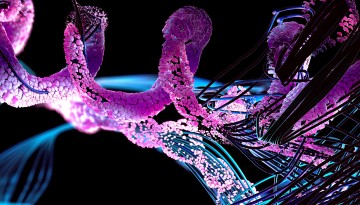
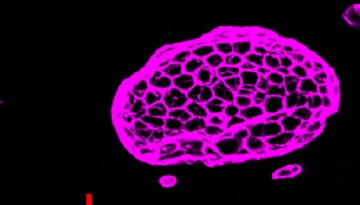
Using a photochemically driven labeling technique, a Cornell-led research group has devised a way to capture cancer-specific protein-to-protein interactions, which could spawn targeted therapies for prostate and other forms of the disease.
A Cornell team’s study to see how people identify and protect themselves from malicious use of their online passkeys paints a “grim picture” of people’s ability to alleviate the threat posed by such online invasions of privacy.
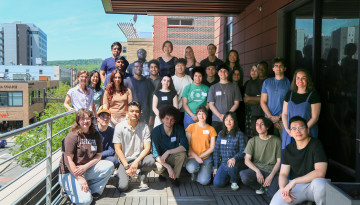
The August Startup Cornell podcast features doctoral students Doris Xu and Katrina Davis, two founders who were part of a summer Prototyping Hardware Accelerator at Rev: Ithaca Startup Works, a business incubator and startup workspace in downtown Ithaca.
After a successful pilot launch in the spring, Cornell’s AI Critical Literacy Program will be offered in the fall to all incoming students as well as other interested students, faculty members and staff.
An initiative to handle minor academic integrity violations in classes is rolling out to the entire university in the fall semester after a successful two-and-a-half-year pilot.
Brain-resident immune cells that have reached an old-age state called “senescence” secrete a protein that causes dysfunction in other brain cells, according to Weill Cornell Medicine researchers, a finding that could shed light on memory loss.
The Purpose Science and Innovation Exchange has received a three-year, $3.5 million grant from the Bezos Family Foundation to launch two new fellowships aimed to help youth develop a sense of purpose.