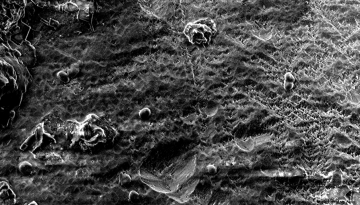
Researchers developed a method that uses krypton gas to slash the deposition temperature of the corrosion-resistant metal tantalum, resulting in thin films that have substantially higher electronic conductivity.
Researchers developed an ultrafast-dissolving nanofiber film that can deliver a cocktail of three drugs so quickly and effectively, 90% of the formulation is released in less than two seconds.
The mixing waters in the Labrador Sea, sandwiched between Greenland and Newfoundland, provides enough oxygen to sustain life throughout the deep North Atlantic Ocean.
The latest study from the Food Systems Countdown Initiative (FSCI) reveals the stark reality of where global food systems transformation stands: For most indicators on health, environment, livelihoods, governance and resilience, a vast majority of countries will not meet the internationally agreed 2030 goals.
A genetically engineered bacterium can rapidly break down one of Earth’s most abundant minerals, opening a promising new pathway for removing CO2 from the atmosphere and recovering critical elements, according to new Cornell research.