A multidisciplinary team aims to build a more inclusive AI shaped by global cultures and knowledge – one of three projects that make up Cornell’s new GlobalGrand Challenge: The Future.
Faculty and staff within Cornell’s Department of Public & Ecosystem Health have been funded by the U.S. Centers for Disease Control and Prevention’s (CDC) National Center for State, Tribal, Local, and Territorial Public Health Infrastructure and Workforce to help strengthen the public health system in the United States.
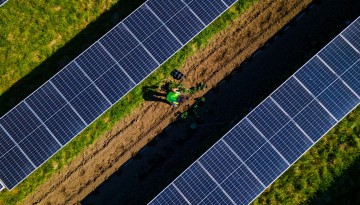
A small experimental apple orchard at Cornell’s Hudson Valley Research Laboratory may soon be topped by solar panels, which would capture the sun’s energy and may prove beneficial to the trees.
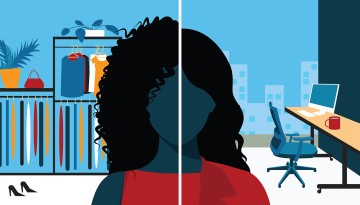
Millennial Black women felt they had autonomy in navigating beauty standards in their personal lives but felt more restricted at work, according to a new Cornell study.
Your career can thrive when your path is not linear, a panel of alumni and business leaders said at the seventh annual Charles H. Dyson School of Applied Economics and Management Dean’s Distinguished Lecture, Sept. 23 in the Alice Statler Auditorium.
A group of nine Cornell students and nine high school students with disabilities or communication challenges in the BOCES Career Program met for 12 weeks as part of the “A BIRDSONG” Program.
Cornell has released additional data related to the incoming class of 2028, the first cohort of undergraduates admitted since the U.S. Supreme Court ruling that prohibited race-conscious admissions practices.
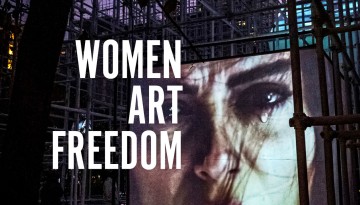
Across a series of 10 “acts,” architecture Associate Professor Pamela Karimi’s new book, “Women, Art, Freedom,” investigates the art and activism in Iran that have played a crucial role in the Woman, Life, Freedom uprising in Iran.
Small companies may post higher wages for entry level positions than large companies – potentially attracting better talent even though the larger companies have more influence on the market, according to new Cornell research.