By examining Jupiter’s moon Io – the most volcanically active place in the solar system – Cornell astronomers can study a vital process in planetary formation and evolution: tidal heating.
Taking race into account when developing tools to predict a patient’s risk of colorectal cancer leads to more accurate predictions when compared with race-blind algorithms, researchers find.
With funding from the National Science Foundation, Cornell and a group of institutional partners have created the Upstate New York Energy Storage Engine to advance energy storage technology and boost large-capacity battery manufacturing in the region.
The campuswide career fair for students returns in-person this fall for the first time since 2019, after shifting to a virtual environment due the COVID-19 pandemic.
The College of Veterinary Medicine and partners have launched a free online course, “Mental Health and Suicide Prevention in Rural America,” to give learners support strategies and resources to navigate mental health challenges in rural communities.
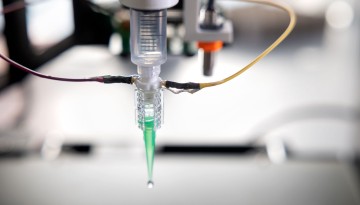
A smart sensor that attaches to the tip of a syringe can measure, in real time, the concentration and viability of the cells that pass through it – a potential breakthrough for biomedical 3D printing and cell therapy.
Atkinson has announced funding for nine new projects that will bring together Cornell Atkinson researchers with Environmental Defense Fund practitioners.
Marielena Hincapié, a national leader on immigration reform and immigrant justice, and Lt. Gen. Ben Hodges, former Commanding General of U.S. Army Europe, have been named the 2024-25 John W. Nixon ’53 Distinguished Policy Fellows at the Cornell Jeb E. Brooks School of Public Policy.