Cornell’s first Community Field Day – with sports, games, snacks and crafts – will celebrate togetherness, physical play and well-being on Sunday, Sept. 22, from 10 a.m. to noon at Schoellkopf Field.
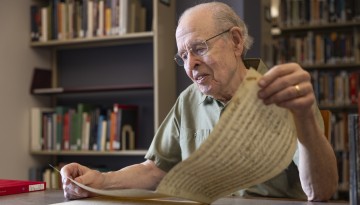
Neal Zaslaw, the Herbert Gussman Professor of Music Emeritus, spent three decades assembling a comprehensive catalog of Mozart’s 600-plus compositions.
Cornell’s “Antisemitism and Islamophobia Examined” series concludes this semester with a talk by Derek Penslar, the William Lee Frost Professor of Jewish History at Harvard University.
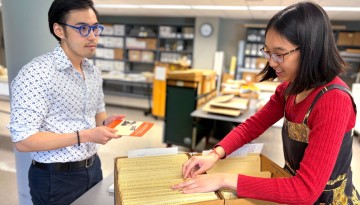
The history of labor organizations and worker issues in China is the focus of “Keywords of Chinese Labor: An Exhibition,” opening this month in an art gallery in Brooklyn. The exhibition will include daily guided tours and events.
The Deanne Gebell Gitner ’66 and Family Annual Prize for Teaching Assistants puts graduate TAs in the spotlight, celebrating and recognizing them for their impact and contributions to education at Cornell.
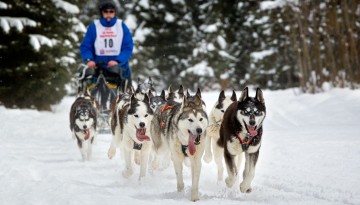
A massive multi-institution genomic survey of the Siberian husky has revealed that sled dogs descended from two distinct lineages of Arctic canids and originated in the northeastern Siberian Arctic generations earlier than previously thought.
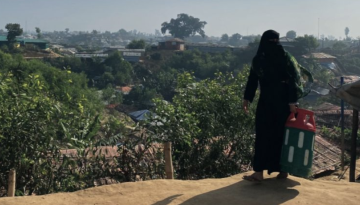
Scholars and policymakers need to look at more than "gender equality" to assess women’s status and how it contributes to political violence or peace, political scientist Sabrina Karim argues in a new book.
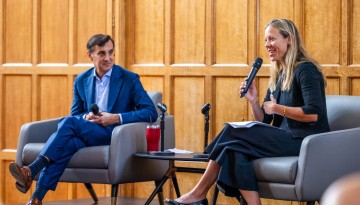
Universities must do more to prepare students to participate in democracy, Johns Hopkins University President Ronald Daniels said at a Sept. 13 event launching the Cornell Jeb E. Brooks School of Public Policy’s Center on Global Democracy.
An internationally recognized leader in social networks and algorithmic fairness, the Bowers CIS professor won the award for his foundational contributions in computer science and social science.