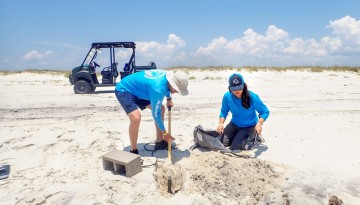
The experiment gave researchers data on the rates at which stranded dolphins are found and reported, and identified areas where fewer decoys were detected, which may merit extra scrutiny by trained observers.
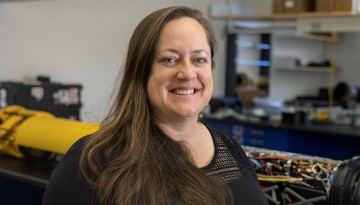
Britney Schmidt, associate professor of astronomy in the College of Arts and Sciences and of earth and atmospheric sciences in Cornell Engineering, has been named a laureate of the Blavatnik National Awards for Young Scientists.
Cornell Law School’s incoming Class of 2027 showcases a wide range of backgrounds and experiences while boasting impressive academic credentials. The latest cohort of 216 students was selected from a competitive pool of 3,746 applicants.
Cornell, the only institution offering regular multilevel instruction in all six of the major Southeast Asian languages – Burmese, Indonesian, Khmer, Filipino (Tagalog), Thai and Vietnamese – will host a conference on the teaching of these languages on Sept. 19-21.
The Communal eXtended-Reality (CXR) system is a cutting-edge blend of the physical and digital worlds in which virtual scenes are overlaid onto the real world, designed to engage communities in new ways.
Researchers created a robot less than 1 millimeter in size that is printed as a 2D hexagonal “metasheet” but, with a jolt of electricity, morphs into preprogrammed 3D shapes and crawls.
A two-day training program for the New York State Department of Homeland Security and Emergency Services helps local health officials and first responders convey key messages in a crisis.
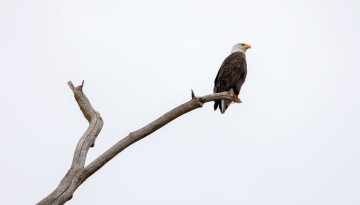
Bald eagles are the most vulnerable to lead poisoning from hunters' ammunition of more than 30 species known to scavenge deer carcasses in New York state, Cornell research finds.