The journey from a Ph.D. to an academic career can be challenging to navigate, but the NextGen Professors Program can help prepare students and postdocs for the job search and transition to professor.
A team of two Cornell information science doctoral students received 2024 Qualcomm Innovation Fellowships, selected as one of 16 winning teams from 55 initial project teams for their proposal on wearable technology.
Biological and environmental engineering alumnus Christian Guzman, M.S. ’11, Ph.D. ’16, spoke about the importance of community during the alumni keynote at the 2024 Summer Success Symposium, an opportunity for incoming students.
A new computational system called Schemonic, developed by Cornell researchers, cuts the costs of using large language models such as ChatGPT and Google Bard by combing large datasets and generating what amounts to “CliffsNotes” versions of data.
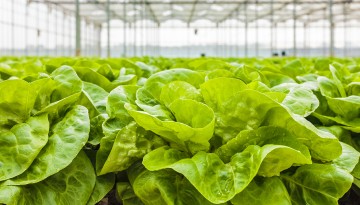
Integrating AI into environmental control systems could reduce energy consumption for indoor agriculture by 25% – potentially helping to feed a growing world population.
Associate Professor of Economics and Public Policy Colleen Carey is taking a unique approach to her sabbatical year, traveling to Washington D.C. to take up a part-time advisory role as Fellow at the Centers[CC1] for Medicare and Medicaid Services.
The twenty startups competing for a $3 million in prize money in the sixth annual Grow-NY Food and Agriculture Business Competition promise to lead innovation and growth beyond their own companies, to the global food and agriculture industry and the region’s abundant agrifood ecosystem.