The twenty startups competing for a $3 million in prize money in the sixth annual Grow-NY Food and Agriculture Business Competition promise to lead innovation and growth beyond their own companies, to the global food and agriculture industry and the region’s abundant agrifood ecosystem.
Obtaining a heart rate in reptiles can be difficult, but researchers have identified an easy-to-reach spot to obtain a pulse rate, which matches the heart rate in healthy reptiles.
Brooks School Senior Associate Dean of Faculty Development Jeff Niederdeppe was recently appointed Liberty Hyde Bailey Professor by the College of Agriculture and Life Sciences.
Best-selling writer Cory Doctorow, filmmaker Louis Massiah ’77 and award-winning journalist P. (Palagummi) Sainath have been appointed as the latest Cornell A.D. White Professors-at-Large.
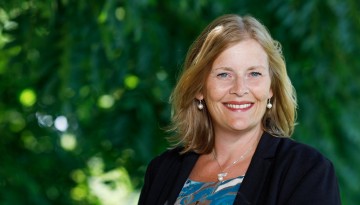
Jennifer Tavares, president and CEO of the Tompkins County Chamber of Commerce, has been hired as the director of Cornell’s Office of Community Relations, in the Division of University Relations. Tavares will start in her new role on Oct. 16.
The TeraPore Technology co-founder and CEO is featured in the 2024 Faces of American Innovation Report along with four other honorees selected to receive the award.
New data summaries from the Cornell Lab of Ornithology’s eBird platform will help state wildlife planners assess the status of bird populations that live in or pass through their state – a crucial tool in protecting species.