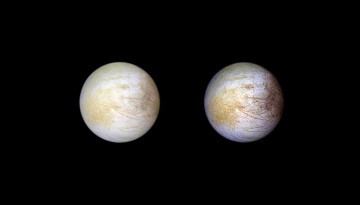
Astronomers using data from NASA’s James Webb Space Telescope have identified CO2 on the icy surface of Jupiter’s moon Europa – one of a handful of worlds in our solar system that could potentially harbor conditions suitable for life.
An interdisciplinary team led by Cornell has received a five-year grant to launch a new center for engineering, testing and commercializing point-of-care diagnostic devices that will have international reach.
Professors Galina Hayes (College of Veterinary Medicine) and Sheri L. Johnson (Law) have each won Cornell’s highest honor for teaching and academic advising in programs that lead to an advanced degree.
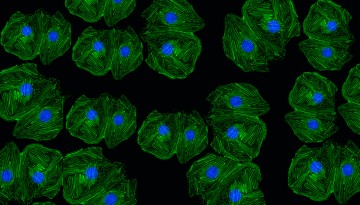
Craniosynostosis, the premature fusion of the top of the skull in infants, is caused by an abnormal excess of a previously unknown type of bone-forming stem cell, according to a preclinical study led by researchers at Weill Cornell Medicine.
Enabled by a custom thermometer, Cornell researchers have observed superfluid fluctuation effects, possibly gaining new insight for quantum computing and the physics of the early universe.
Cornell has been awarded a grant to fund the Regional Interdisciplinary Transportation Ph.D. Fellowship Program in Economics, Engineering and Policy – a unique program for doctoral students that will integrate engineering and economic research in the field of transportation systems technology.
Nicole Benedek, associate professor of materials science and engineering, uses theoretical and computational techniques to design functional materials that can improve modern technologies such as computer chips, ultrasound machines and solar panels.
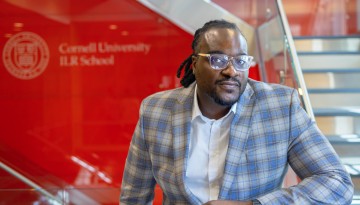
After serving two prison terms totaling more than four years, Thomas Jones, master's student in the ILR School, committed to turning his life around – through education and giving back.
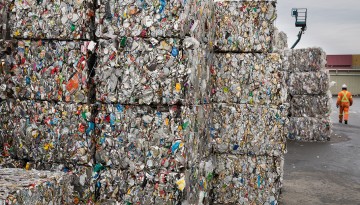
A new Cornell-led project aims to use and reduce carbon dioxide emissions and residue from aluminum recycling – a carbon-heavy process – to produce high value products and address climate change.