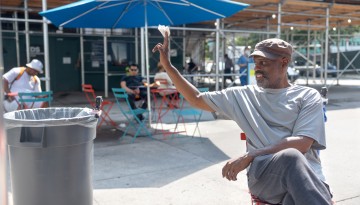
An interactive bell tower designed by Paul Ramírez Jonas is one of six artworks featured in “Beyond Granite: Pulling Together,” which aims to create a more inclusive commemorative landscape on the mall.
Cornell is among 13 higher-education institutions that have joined the Citizens & Scholars Campus Call for Free Expression, a commitment by college presidents to spotlight the principles of critical inquiry and civic discourse on their campuses.
A technique that enables scientists to record gene mutations and patterns of gene activity in individual cells has been extended to cover RNA splicing as well, in a study co-led by researchers at Weill Cornell Medicine.
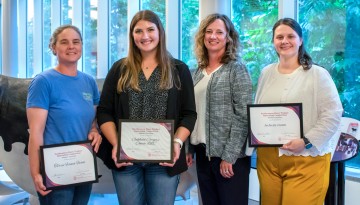
Three dairy innovators – lu.lu Ice Cream, Oakfield Corners Cheese LLC and Terra Firma Farm – were named winners of the inaugural Northeastern Dairy Product Innovation Competition following a pitch competition on Aug. 8 in Stocking Hall.
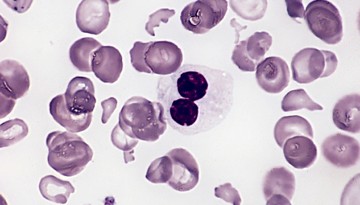
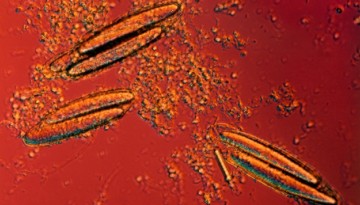
Current methods can vastly overestimate the rates that malaria parasites are multiplying in an infected person’s blood, which has important implications for determining how harmful they could be to a host, according to a new report.
Cornell Tech researchers deployed “trashbots” in Brooklyn for two weeks in July. The goal of the experiment was to see how people interact with, and make sense of, service robots in public spaces. The cleaning was an added bonus.
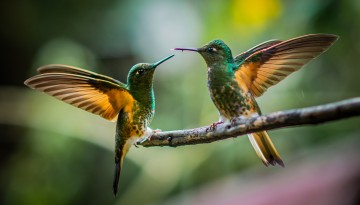
A Cornell research team has developed a new way to design complex microscale machines, one that draws inspiration from the operation of proteins and hummingbird beaks.
Deborah Fowell, professor and chair of the Department of Microbiology and Immunology in the College of Veterinary Medicine, has received a five-year, $2.32 million MERIT award from the NIH to study the factors that help guide immune cells.
A new gene-editing tool created by Weill Cornell Medicine investigators will enable cancer researchers to study the impact of specific genetic changes in preclinical models.