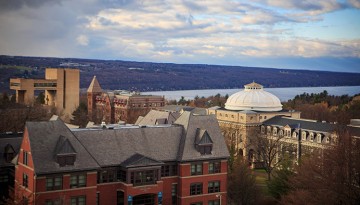
Exactly 46 years since they trucked into Cornell and delivered one of the most iconic and beloved performances of their long, strange career, remaining members of the Grateful Dead will return, as Dead & Company, to play a fundraiser concert in Barton Hall on May 8.
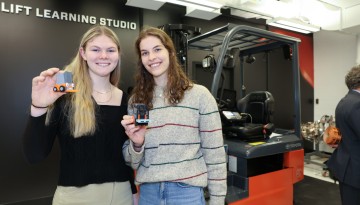
The Forklift Learning Studio, developed in partnership with Toyota Material Handling, provides students taking mechanical engineering courses with a place to apply curriculum on real products.
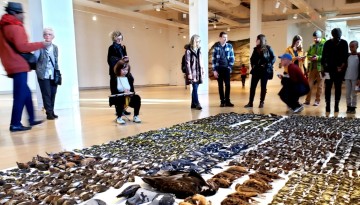
Citizen science has enabled much of the progress in understanding the scope of bird deaths from building and window collisions, according to a new study.
Hübner's winning article from the Journal of the History of Philosophy gives a new reading of Spinoza’s claim that minds and bodies are “one and the same thing.”
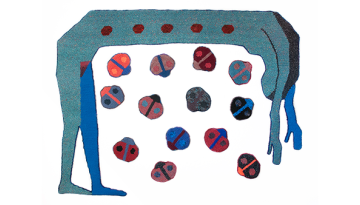
In advance of his March 23 lecture at the College of Architecture, Art, and Planning, Art Department faculty member Wells Chandler shares insights into his studio practice and approach to pedagogy, both of which seek to offer liberating safety and intense delight.
Human assumptions regarding language usage can lead to flawed judgments of whether language was AI- or human-generated, Cornell Tech and Stanford researchers found in a series of experiments.
A new workshop series is informing the Cornell student community – especially those limited due to socioeconomic status – about basic needs resources available through the university, including food, housing, health and wellness.
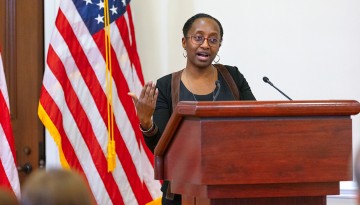
Drawing on personal experience, Jamila Michener urged policymakers at a White House event to learn from beneficiaries of government programs and services.
Astrophysicist Wendy L. Freedman will describe the current state of cosmology and her work with the Hubble Space Telescope that has led to some of the most precise measurements of the Hubble constant made to date.