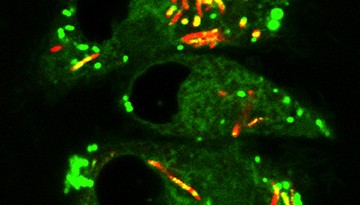
A novel compound, developed by College of Veterinary Medicine researchers, that has the potential to starve the bacteria that causes tuberculosis – the world’s second-leading infectious killer – is entering human clinical trials.
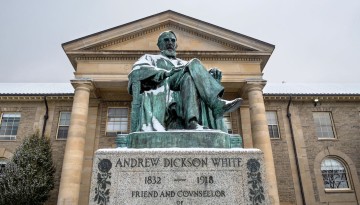
A mathematician and author of best-selling books that speak to math’s societal and technological roles in the world will visit campus March 13-17 as an A.D. White Professor at Large.
Cornell's Nolan School will host its annual Professional Development Program for hospitality executives in Ithaca, New York, this summer in June on the Cornell University campus.
The Bowers Undergraduate Research Experience (BURE) is a paid summer research opportunity with Cornell faculty, allowing students to develop new skills and gain insights into careers in research.
In the new performance work “Heading into Night: a Clown Ode on…(forgetting),” director Beth Frances Milles ’88, associate professor of performing and media arts in the College of Arts and Sciences, investigates the poignancies of memory.
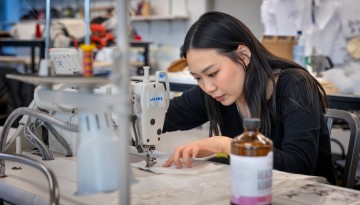
“In Retrospective Forethought” – looking backward and ahead – is the theme for the 39th annual CFC Spring Runway Show, March 11 beginning at 4:30 p.m. The show will cap “Cornell Fashion Week,” which begins March 4.
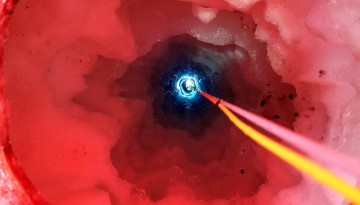
The Icefin team’s observations revealed more than a century of geological processes beneath the Ross Ice Shelf near where it meets Kamb Ice Stream, and will inform models of sea-level rise.
Now in its fourth year, the Tenants Advocacy Practicum at Cornell Law School continues to expand its impact as it works to bridge the housing justice gap in Ithaca and the surrounding counties. The practicum recently achieved a new milestone by recovering more than $100,000 for local tenants over the course of a year for the first time.