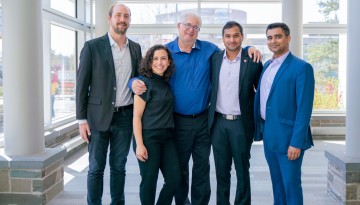
Four students in the masters of management in hospitality program won The Sustainability Hospitality Challenge with a business plan for “NIMBUS,” a carbon-neutral hotel room that folds up and moves with its guests by hot air balloon.
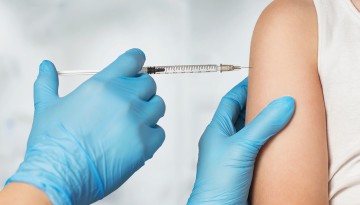
Researchers from Weill Cornell Medicine and colleagues found that two-dose vaccines still provide protection against lung disease in rhesus macaques a year after they had been vaccinated as infants.
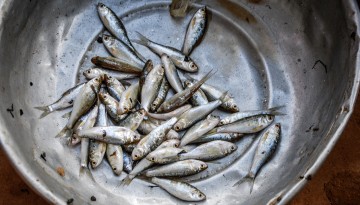
Inexpensive, small fish species caught in seas and lakes in developing countries could help close nutritional gaps for undernourished people, and especially young children, according to new research.
Researchers from Boyce Thompson Institute and Cornell have identified genes that could help plant breeders develop drought-resistant fruit, through a study that provided the first-ever comprehensive picture of how a fruit’s gene expression changes in response to water stress.
Owolabi Legunsen, assistant professor of computer science, is developing new methods for testing and validating code, with the goal of finding and removing costly bugs.
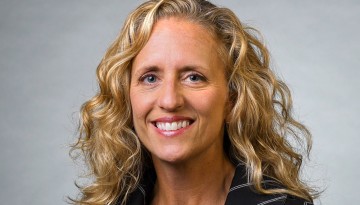
Nicki Webber Moore, vice president and director of athletics at Colgate University, has been named Cornell’s Meakem Smith Director of Athletics and Physical Education. She will be Cornell’s first female director of athletics.
The Samuel Curtis Johnson Graduate School of Management is offering qualified candidates who have been laid off by a U.S. tech company an application fee waiver and an application test waiver for the January 2023 deadline.
Philanthropist K. Lisa Yang ’74 has endowed $1.5 million to establish the Katharine B. Payne Fellows Program in Conservation Bioacoustics in honor of Katy Payne ’59, a pioneer in the burgeoning science of bioacoustics.
Associate Professor Greg McLaskey ’05 and members of his Cornell Engineering research group have developed a method for mimicking aftershocks, findings that eventually could help scientists better predict earthquakes.