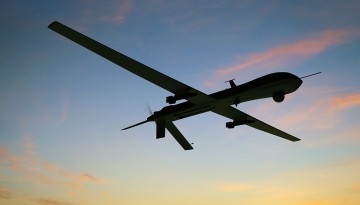
A first-of-its kind survey reveals that Americans consider military aerial drones strikes, used with the consent of other nations, to be the most morally legitimate or appropriate.
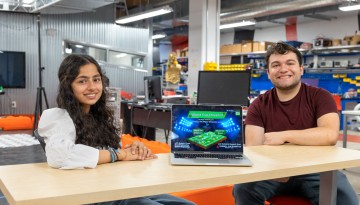
The FIFA World Cup begins Nov. 20 in Qatar, and Cornell Engineering is partnering with the Afghan Dreamers all-girls robotics team in an effort to harness this energy – and inspire young people to dream big, in both soccer and STEM learning.
The app developed by Cornell researchers uses augmented reality to help users repeatedly capture images from the same location with a phone or tablet to make time-lapse videos – without leaving a camera on site.
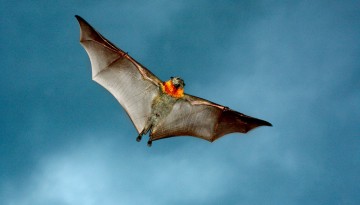
Preserving and restoring natural habitats could prevent pathogens that originate in wildlife from spilling over into domesticated animals and humans, according to two new companion studies.
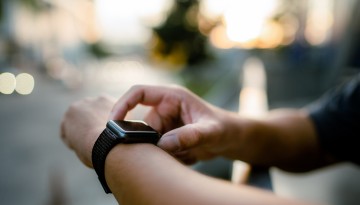
Personal sensing data could help monitor and alleviate stress among resident physicians, although privacy concerns over who sees the information and for what purposes must be addressed, according to collaborative research from Cornell Tech.
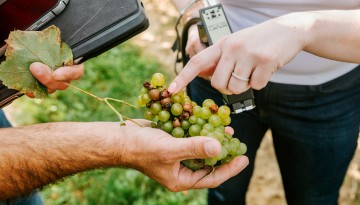
The robots will roll through vineyards and gather data to allow breeders and growers to evaluate their crop leaf by leaf, in real time, down to the chemical level.
Faculty from seven Cornell colleges have been named Engaged Faculty Fellows through the David M. Einhorn Center for Community Engagement, joining a network that is committed to advancing engaged teaching and scholarship at Cornell and in their academic disciplines.
New research offers insight as to why individuals who inherit a mutation in one copy of the BRCA1 gene often develop mutations in their remaining normal copy of the BRCA1 gene, setting the stage for tumors to develop.