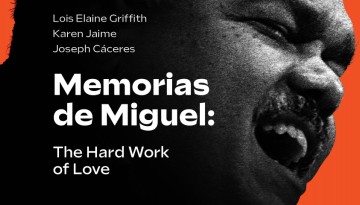
The founder used prose and poetry to name, document, and celebrate the New York Puerto Rican experience and its alignment with the sociocultural and political movements of the late 1960s and 1970s.
Three startups – two helping to make a green economy and one creating next-generation microbial images – graduated Nov. 16 from Cornell’s Center for Life Science Ventures business incubator.
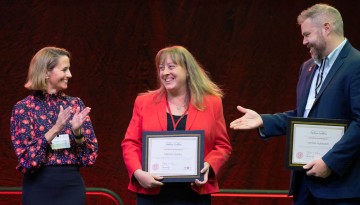
Nineteen individuals and three teams received President’s Awards for Employee Excellence – including a new award, Culture of Sustainability – during a celebration held Nov. 15 in Barton Hall and online.
Holly and Sean Olson have established the Olson Family Strategic Initiatives Fund at the Cornell Jeb E. Brooks School of Public Policy to help create the world they want to live in.
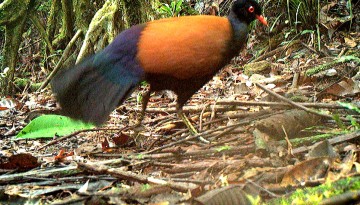
A September expedition to Papua New Guinea confirmed via video the existence of the black-naped pheasant pigeon, a critically endangered species that has not been reported for 140 years.
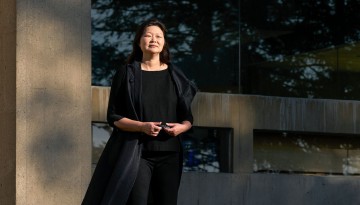
J. Meejin Yoon, B.Arch. ’95, has been appointed to a second term as the Gale and Ira Drukier Dean of the College of Architecture, Art and Planning, Provost Michael I. Kotlikoff announced Nov. 17.
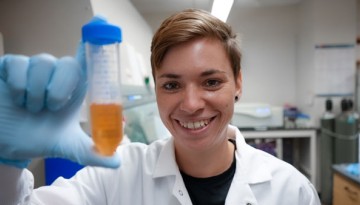
This Q&A features Christina Kerkenpass, a veterinary student at the Free University of Berlin, who participated in the Cornell Veterinary Research Program and conducted research on feline infectious peritonitis this summer.
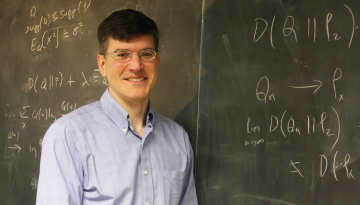
Professor Aaron Wagner and his former students were recognized with the 2022 IEEE Information Theory Society Paper Award for their research employing feedback to improve coding performance.
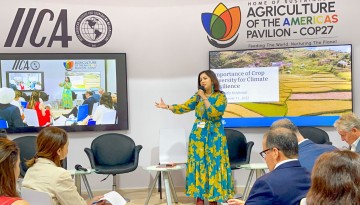
Kehkashan Basu, an MBA student at the Johnson School, hopes to kindle positive global change. She moderated the first roundtable meeting between government officials and youth at COP27.