Sustainable Animal Husbandry, a three-credit course taught by Melanie Soberon at Cornell’s College of Veterinary Medicine, will be offered online during Winter Session 2023. The course is a way for high schoolers interested in veterinary or animal science to understand what it would be like to pursue those studies at college or what a career in those fields would be like.
Testing time perception in an unusually lifelike setting – a virtual reality ride on a New York City subway train – an interdisciplinary Cornell research team found that crowding makes time seem to pass more slowly.
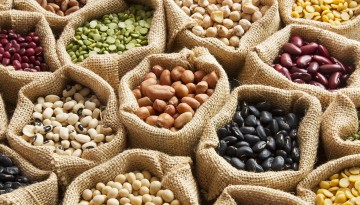
In an international, multi-institutional effort, Cornell’s Food Science Department will research how to increase iron and zinc absorption, thanks to a Bill & Melinda Gates Foundation grant.
Tom E. Davis, professor emeritus of economics in the College of Arts and Sciences who was an expert on economic development in Latin America, died Oct. 27 in Ithaca. He was 93.
A Cornell-led collaboration used machine learning to pinpoint the most accurate means, and timelines, for anticipating the advancement of Alzheimer’s disease.