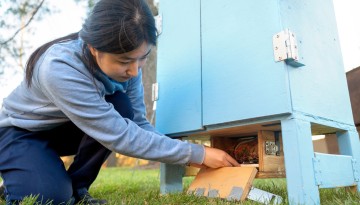
The 12th annual Cornell Town-Gown Awards – also known as the TOGOs – celebrated cooperation between the university and the greater Ithaca community at a virtual ceremony held Nov. 19.
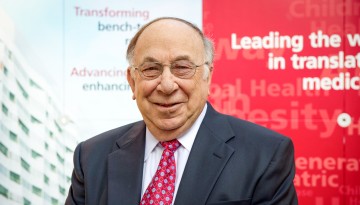
Robert J. “Bob” Appel ’53, a vice chair of Weill Cornell Medicine’s Board of Fellows, Cornell trustee emeritus and presidential councillor, died Nov. 19 in New York, at age 91.
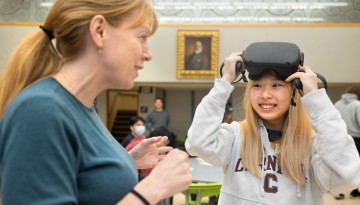
Thanks to Cornell’s Center for Teaching Innovation, students recently had the chance to prepare a sample for cryo-electron microscopy – a technique not often available to young researchers – using virtual reality headsets.
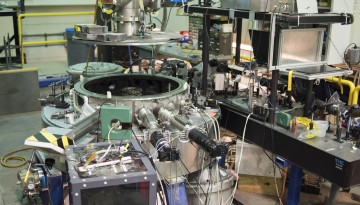
For nearly six decades, Cornell’s Laboratory of Plasma Studies has remained at the forefront of plasma science – a tradition its incoming director, Gennady Shvets, professor of applied and engineering physics, plans to continue while also broadening the lab’s research capabilities.
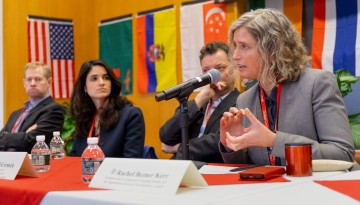
More than 300 faculty, staff and students from Cornell and the new Cornell Global Hubs gathered Nov. 16-17 to discuss ideas for the next universitywide Global Grand Challenge.
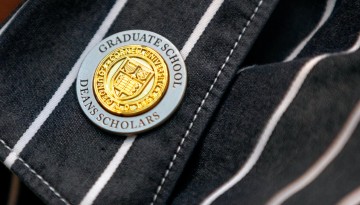
The Graduate school welcomed over 80 new Dean’s Scholars into the community of over 370 current Dean’s Scholars at Cornell. The Dean’s Scholars program honors recipients of competitive, diversity-focused fellowships.
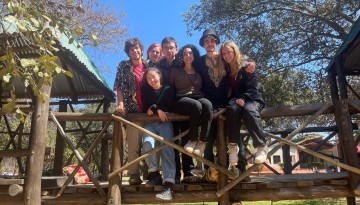
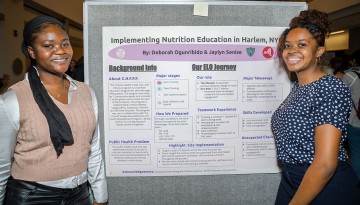
More than 100 students presented their work on a wide array of projects aimed at improving access to public health everywhere from Tompkins County to Tanzania, as part of the 2022 Global and Public Health Experiential Learning Symposium, held Nov. 11 in Cornell’s Physical Sciences Building.