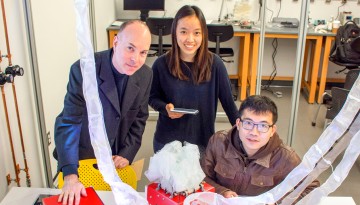
Supported by a National Science Foundation grant, Keith Evan Green, director of the Architectural Robotics Lab, is advancing a new category of robots that people will inhabit.
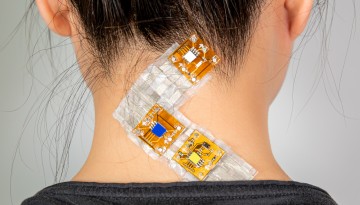
Members of Cornell’s Hybrid Body Lab have come up with a reliable on-skin computing interface that’s easy to attach and detach, and can be used for a variety of purposes – from health monitoring to fashion.
Tracy Mitrano JD '95 will be the moderator of a panel discussion on the 2022 midterm elections, held the day after the voting at the Cornell Jeb E. Brooks School of Public Policy. The in-person event features three prominent Cornell political scientists.
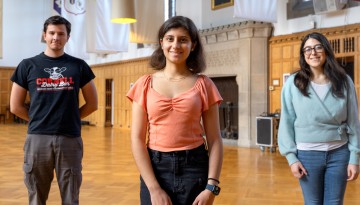
For the first time, nearly all Cornell students who live on campus will be able to vote on campus in a general election, thanks in part to the advocacy of the student group Cornell Votes.
Two populations of flycatchers that evolved on different remote islands separately developed the same trait – all-black feathers – according to a new study that used machine learning to understand the process that shaped the birds’ genome.
In a new book, “Seeking Truth and Hiding Facts,” Jeremy Lee Wallace, associate professor of government, explains why a few numbers long defined Chinese politics – until they no longer measured up.
At the upcoming Conference of the Parties – best known as COP27 – 11 Cornell students will help delegations from small countries gain a stronger environmental voice.