The Cornell Board of Trustees has approved parameters for the university’s 2026-27 budget, including undergraduate tuition, housing and dining rates for the coming academic year.
Researchers have developed a bio-inspired approach to mixing heat and molecules in fluids – findings that could inform future biomedical devices, heat exchangers and soft robotics.
A new Cornell-led project will create a global record that shows how river systems around the world have changed under human influence over the last 75 years.
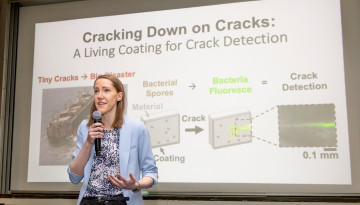
Ellen van Wijngaarden won Cornell's Three Minute Thesis (3MT) competition. 3MT challenges graduate students to prsent their thesis research compellingly to general audiences in just three minutes.
The Center for Racial Justice and Equitable Futures at Cornell University has named five faculty fellows from across three colleges and five departments to its inaugural cohort.
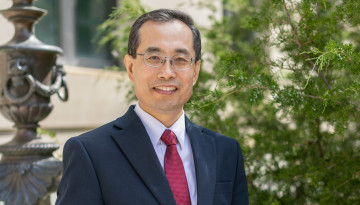
Jinhua Zhao, the David J. Nolan Dean of the Charles H. Dyson School of Applied Economics and Management, has been reappointed for a second five-year term.