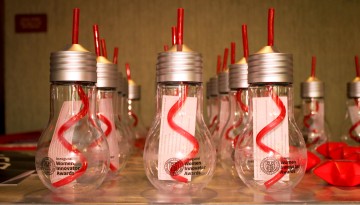
Three Cornell scientists were honored during a June 1 ceremony promoting women’s engagement in innovation and commercialization – part of Cornell’s efforts to elevate women inventors, who were awarded just 12.8% of all U.S. patents in 2019.
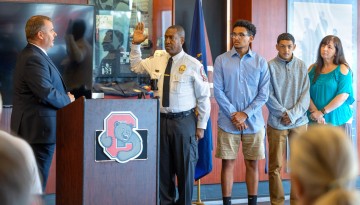
Bellamy, an 18-year veteran of the Cornell University Police Department and its first Black chief, will help lead the university’s transition to a new public safety structure as part of the Division of Public Safety.
Fernando Santiago ’86 was recognized for his service in Monroe County, where he leads several nonprofits that assist people in need of food, housing, training and other support.
Social justice and engineering blend beautifully. Last semester, Cornell students built a trailblazing food-sharing pantry to take an edge off chronic hunger among local residents.
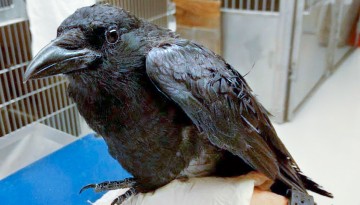
Researchers tracked the crows’ immune response while in the hospital, finding that the birds shed the virus in respiratory secretions for at least 93 days after being infected.
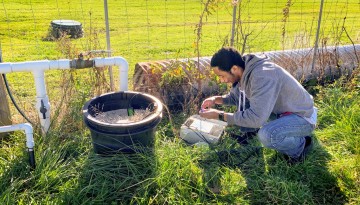
Farmers can tailor their efforts to control weeds more effectively by pinpointing when a particular weed will emerge, according to a new Cornell study.
A new study shows how digital ag may be unintentionally creating problems for farmers, and found that enabling farmers to tinker with their own systems and involving them early in the design process could better translate technology from the lab to the field.
Cornell is one step closer to determining the feasibility of using deep geothermal energy to heat the Ithaca campus now that drilling has commenced for the Cornell University Borehole Observatory.