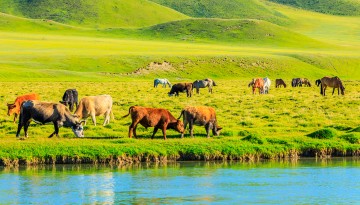
Production of animal protein in China has increased by 800% over the past 40 years, but new research shows why the amount of climate-warming nitrous oxide released from this animal farming has not risen as quickly.
Found in a glue trap meant to capture insects, the small bird was taken to Cornell’s Janet L. Swanson Wildlife Hospital after its rescuers attempted to free the creature from the powerful adhesive.
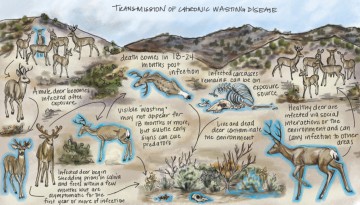
Veterinary student Laura Donohue is blending her artistic talents and passion for animals in more than 100 illustrations for a new book on wildlife health and disease in conservation.
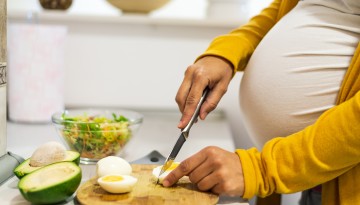
The nutrient choline – shown to have long-term benefits for children whose mothers consume it during pregnancy – also helps the body more efficiently use an omega 3 fatty acid that is essential for fetal development.
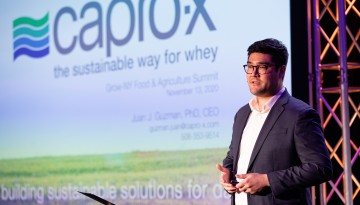
In its four years, the competition has received applications and interest from more than 1,000 businesses in 32 states and 37 countries. In all, 59 finalists have been selected to date, with 21 winners sharing $9 million in startup funding.