Cornell researchers and a startup have received more than $7 million in federal grants to advance novel clean energy research that includes wirelessly charging electric vehicles, low-carbon jet fuel and construction materials made from waste.
A project led by Felix Heisel and community partners is investigating deconstruction’s potential as a more sustainable alternative to building demolition, a source of significant waste that contributes to climate change.
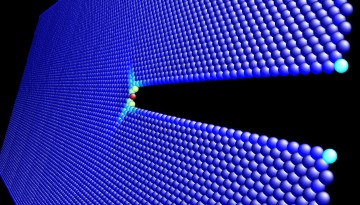
Researchers made a breakthrough in understanding how some materials break. Their discovery could help engineers better anticipate a material’s behavior and design novel alloys that resist fatigue.
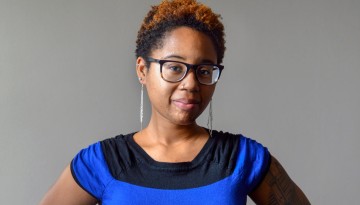
Maya Phillips, a critic at large for The New York Times, has been named winner of the 2020-21 George Jean Nathan Award for Dramatic Criticism. The award committee comprises the heads of the English departments of Cornell, Princeton and Yale Universities.
Cornell computer scientists have developed a new framework to automatically draw “underground maps,” which accurately segment cities into areas with similar fashion sense and, thus, interests.
Assistant professors Pamela Chang, Antonio Fernandez-Ruiz, Daniel Halpern-Leistner and Peter McMahon have won 2022 Sloan Research Fellowships from the Alfred P. Sloan Foundation.
Cambridge University Press called upon Derk Pereboom to write a definitive overview of research on the free will debate for its Philosophy of Mind Elements series, which provides succinct overviews of key topics.
The Cornell Center for Cultural Humility facilitates culturally responsive research, practice and policy that is inclusive across race, ethnicity, class and other markers of identity.
The Cornell Center for Social Sciences grant program, which supports social science research by Cornell faculty members, has awarded $85,000 to 10 professors for their 2022-23 CCSS Faculty Fellows program.