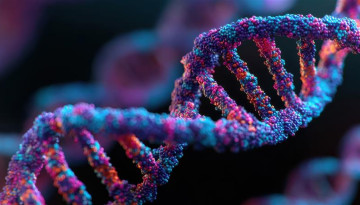
Researchers at Cornell's Weill Institute for Cell and Molecular Biology have uncovered new evidence that two major types of gene-controlling DNA sequences, promoters and enhancers, operate with a shared logic and often perform the same jobs.
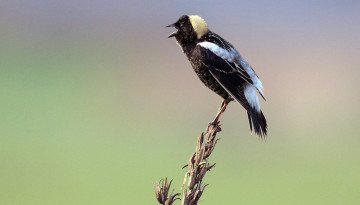
In June 2023, smoke from Canadian wildfires dampened birds’ vocalizations in New York state, with a particularly negative effect on already imperiled grassland birds.
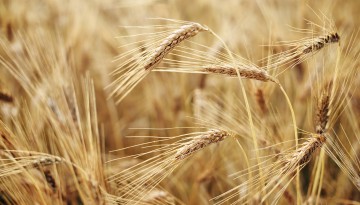
Growing climate-smart crops is half the battle. Consumers need to understand sustainability claims and, more importantly, be willing to pay a premium for them.
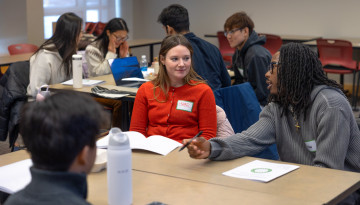
On a Saturday morning in February – the coldest day yet of a cold winter – more than 350 students trekked to Statler Hall for an innovative new course on civics.
In a major expansion of its commitment to access and lifelong learning, Cornell will launch a part-time, fully online Bachelor of Professional Studies degree program in August 2027.
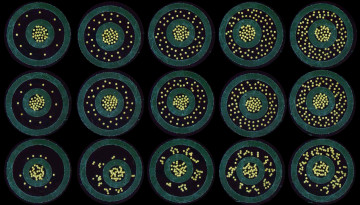
Researchers demonstrated how a swarm of microrobots spinning on a water surface can together generate the fluidic torque needed to manipulate passive structures without any physical contact.
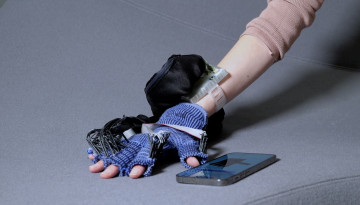
EdemaFlex, a new glove with more than three dozen actuators across all five fingers and the palm, developed by Cornell researchers, aims to reduce swelling for people suffering from edema.