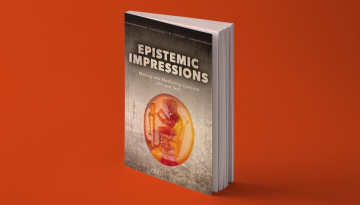
For the ancient Greeks, an image could be understood as a seal pressed on a material to leave a mark, as opposed to an inferior imitation (mimēsis), scholar Verity Platt argues in a new book.
Robert John Sullivan, Jr., one of the world’s foremost authorities on aeolian processes – how wind can carve and change a landscape – died Feb. 15 in Ithaca of amyotrophic lateral sclerosis. He was 63.
The Cornell Center for Social Sciences has selected 10 faculty members as 2026–27 Faculty Fellows, providing course release and funding to support interdisciplinary social science research with real-world impact.
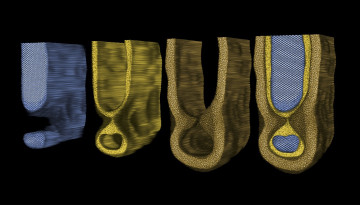
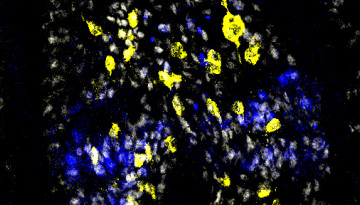
A Cornell-led collaboration used high-resolution 3D imaging to detect, for the first time, the atomic-scale defects in computer chips that can sabotage their performance.
The Assessing and Imagining the Impact of Generative AI on Science Symposium, March 3-5, will feature experts from across academia and industry engaging in discussions on the use and implications of generative AI.
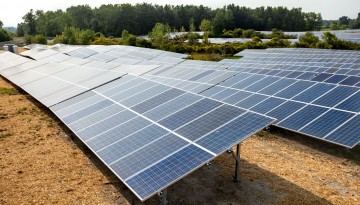
New York state farmers with solar leases say they’ll use the added revenue to invest in their farms, with many stating they don't plan to change their agricultural practices at all.
Ozias A. Moore, Ph.D. ’16, will return to Cornell on March 17 to give the Bouchet Society Lecture, “Building Access, Strengthening Evidence and Advancing Impact for Research and Practice.”
Researchers have found that quantum systems in a frozen state can be stabilized long enough to be a useful strategy for preserving information before it disappears.