A Cornell administrator’s e-book includes anecdotes about biathlon training, how-to tips for new biathletes and a recounting of how he grappled with the death of a family friend.
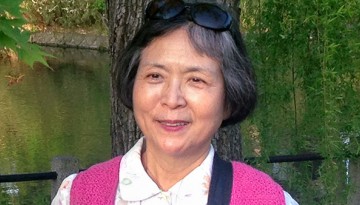
Anthropologist Yohko Tsuji views old age in America from a cross-cultural perspective, comparing aging in America and in her native Japan in her new book, “Through Japanese Eyes: Thirty Years of Studying Aging in America.”
Micky Falkson, a senior lecturer in the Department of Economics and one of its longest-serving faculty members, died at home in Ithaca Nov. 7. He was 83.
Chiara Galli, one of six members of the Klarman Postdoctoral Fellowships inaugural cohort, researches the U.S. asylum process, specifically the experiences of unaccompanied minors.
Cornell researchers have created a fiber-optic sensor that combines low-cost LEDs and dyes, resulting in a stretchable “skin” that detects deformations such as pressure, bending and strain.
Cornell food scientists confirm that the grain teff helps the stomach and enhances the nutritional value of iron and zinc, according to a new modeling method.