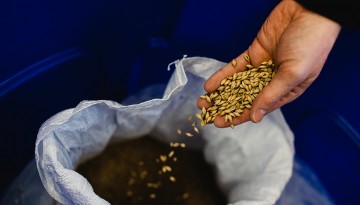
Cornell has developed the first variety of spring malting barley designed to succeed in New York’s wet climate and support the state’s $5 billion craft beer industry. All it needs now is a name.
A Cornell-led collaboration has developed a way to stack two-dimensional semiconductors and trap electrons in a repeating pattern that forms the long-hypothesized Wigner crystal.
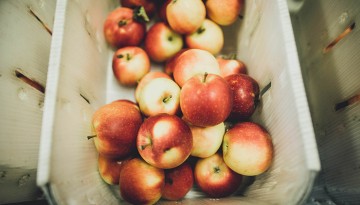
This fall, Cornell AgriTech's Hudson Valley Research Laboratory donated 47,000 pounds of apples and pears to help the more than 40,000 people in need of food assistance in the Hudson Valley region.
Several sites at Cornell Botanic Gardens honor members of the Cornell community, who served in the U.S Armed Forces, and it is among the many enduring acknowledgements of veterans across the Cornell campus.
Undergrads from the School of Hotel Administration collaborated with students from a range of disciplines to create Cornell Blockchain, a club that aims to develop the next generation of blockchain leaders.
Disease-specific training may improve home care workers’ job satisfaction and confidence caring for patients, according to new research from Weill Cornell Medicine and the ILR School.
Nobel and Pulitzer Prize-winning author Toni Morrison, M.A. ’55, will be one of six women inducted into the National Women’s Hall of Fame in Seneca Falls, New York. The virtual induction ceremony is scheduled for Dec. 10.