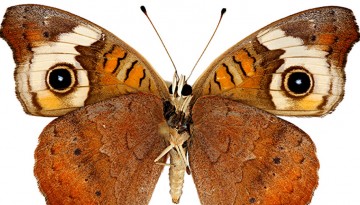
Cornell researchers have identified three genes responsible for changing the color of common buckeye butterfly wings, depending on what time of year the egg hatches and larvae develop.
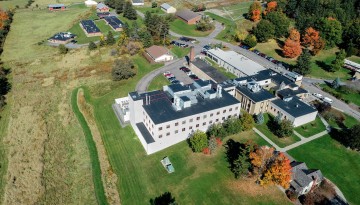
The Baker Institute for Animal Health has evolved and grown since its founding 70 years ago, and its breakthroughs regarding canine infectious diseases have established it as a global center for animal health research.
Thomas Golden, executive director of the Yang-Tan Institute at the ILR School and a pioneer in promoting economic independence for people with disabilities, died Nov. 1 at his home in Waverly, New York. Golden was 57.
A brand-new school at Cornell opened 75 years ago, Nov. 5, 1945, as the ILR School’s first students streamed into Warren Hall on the Ag Quad for Introduction to Industrial Relations.
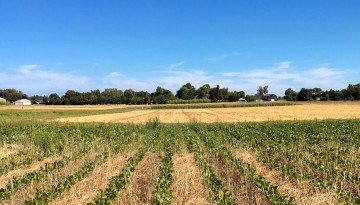
Organic crop farmers in the Northeast and Upper Midwest are facing an increasing number of challenges related to climate change and invasive pests, but a $2 million grant from the USDA will help them find sustainable solutions.
Warren Knapp, 82, professor emeritus of meteorology and climate in the Earth and atmospheric sciences, and the second director of Cornell’s Northeast Regional Climate Center, died Oct. 3 in Ithaca.
An analysis of Denmark’s wind industry offers lessons for policymakers seeking to increase renewable electricity production with limited budgets, according to Cynthia Lin Lawell.
Cornell continues to build a community that welcomes veterans to the university, based on an array of programs and resources that proactively address their needs and draw on their strengths and experiences.