The new school and superdepartments in economics, psychology and sociology are expected to elevate Cornell’s excellence and impact in the social sciences.
Events this week include legendary guitarist Gary Lucas performing a live film score, the Cornell Symphony Orchestra in Bailey Hall, Locally Grown Dance at the Schwartz Center, and faculty talks on wild honeybees and legalizing cannabis.
The four faculty teams that received funding support through the President’s Visioning Committee on Cornell in New York City have conducted cross-campus workshops, hosted interdisciplinary talks and expanded their outreach.
Provost Michael Kotlikoff and Vice Provost for International Affairs Wendy Wolford updated the Cornell community Feb. 27 on the university’s travel guidelines with regards to coronavirus.
Physicist Suzanne Staggs will talk about detecting radiation left over from the Big Bang, using the Atacama Cosmology Telescope, in the Spring Hans Bethe Lecture, March 11 in Rockefeller Hall.
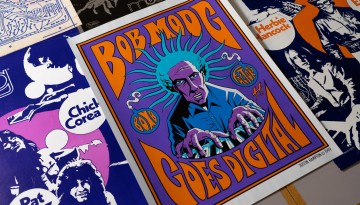
To celebrate the opening of the Cornell University Library archive honoring synthesizer pioneer Robert Moog, Ph.D. ’65, the university is hosting “When Machines Rock: A Celebration of Robert Moog and Electronic Music,” March 5-7.
In her new book “Naked Agency: Genital Cursing and Biopolitics,” Naminata Diabate seeks a nuanced analysis of incidents of naked protest, particularly by women in Africa.
Derrick R. Spires, associate professor of English, was awarded the St. Louis Mercantile Library Prize for his book “The Practice of Citizenship: Black Politics and Print Culture in the Early United States.”
Researchers from Cornell and Pennsylvania State University are developing a high-tech, portable imaging system that will increase profits and yields by making winter grapevine pruning more efficient.