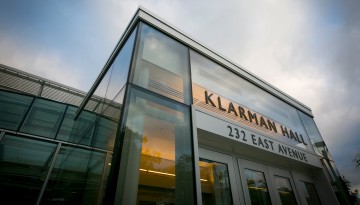
Six of the world’s most promising early-career scholars are recipients of the inaugural three-year Klarman Postdoctoral Fellowships, in Cornell’s College of Arts and Sciences.
Father Daniel McMullin, director of the Cornell Roman Catholic Community, revealed his personal sources of hope and resilience, despite crushing disappointments and setbacks, in his talk at the first Soup & Hope event of the year, Jan. 16 in Sage Chapel.
Cornell’s newest science communications vehicle is “Modified,” a retrofitted, retro-vibe food truck that serves modified munchies with a side of biotechnology knowledge.
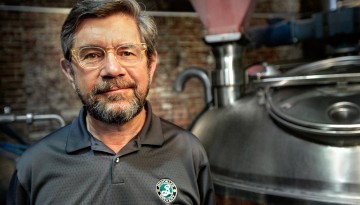
Steve Hindy ’71, MAT ’75, a former English teacher and international journalist who co-founded Brooklyn Brewery more than 30 years ago, has been named Cornell Entrepreneur of the Year 2020.
Researchers from four colleges will study potential warnings for electronic cigarette advertisements that seek to deter teen use of the products without discouraging adults who are trying to quit smoking.
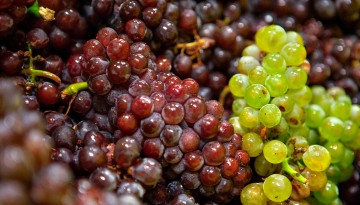
Transferring genetic markers in plant breeding is a challenge, but a team of grapevine breeders and scientists at Cornell AgriTech in Geneva, New York, has come up with a powerful new method.
Jeffery S. Montesano, deputy chief of the Cornell University Police Department, graduated from the FBI National Academy in a ceremony at the FBI Training Academy in Quantico, Virginia.
Deadlines are approaching for College of Arts and Sciences faculty and grad students to express interest and submit proposals for the Cornell University Library’s Grants Program for Digital Collections in Arts and Sciences.