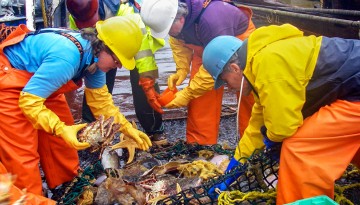
A new collaboration between the Cornell Atkinson Center for Sustainability and The Nature Conservancy this year will fund three studies that could be significant in the face of climate change.
A 23-year partnership between the Rosamond Gifford Zoo in Syracuse, New York, and the College of Veterinary Medicine provides care for endangered species while giving veterinarians and students specialized training.
Using cryo-electron microscopy, assistant professor Liz Kellogg has made recent discoveries that add to our knowledge of Alzheimer’s disease and the fundamental mechanisms of DNA recombination.
Robert Howarth has been appointed to the new Climate Action Council, created to bring about New York’s path to reach net zero greenhouse gas emissions and support green energy.
Cornell faculty and students can now champion greener consumer products, supply chains and commercial trade, as the Cornell Atkinson Center for Sustainability began a partnership with The Sustainability Consortium on Jan. 13.
The second Community Engagement Staff Institute on Jan. 7 drew 70 staff members from across campus to discuss their engagement work with students and ways to strengthen community partnerships.
Researchers from Boyce Thompson Institute have found that plants manipulate nematode pheromones to repel the pests, which cause more than $100 million in damage to crops every year.
A collaboration led by Patrick Reed has discovered the right combination of factors to enable a four-satellite constellation that maintains nearly continuous 24/7 coverage of almost every point on Earth.
The College of Veterinary Medicine has developed a new learning module for high school classrooms that encourages students to directly test the effects of e-cigarette vapor on living cells.