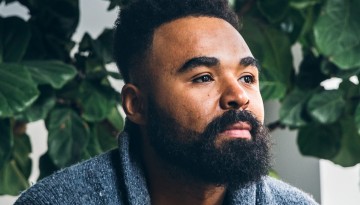
Plant stylist Hilton Carter will talk about transforming living spaces into green landscapes in “Wild at Cornell,” the Cornell Botanic Gardens’ Hamilton Lecture, Oct. 9 in Statler Auditorium. A plant give-away for students is Oct. 3.
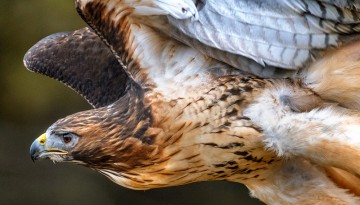
A multidisciplinary team with the Cornell Wildlife Health Lab has created StaPOPd, an online tool that tells users how many plants or animals they need to introduce into a habitat in order to establish a stable population.
Twenty-four faculty members, representing six colleges and the Cornell University Library, make up the 2019-20 cohort of the Engaged Faculty Fellowship Program.
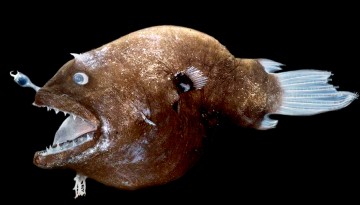
Researchers, including Tory Hendry, assistant professor of microbiology, have uncovered new insights into a symbiosis between bioluminescent bacteria and deep-sea anglerfish.
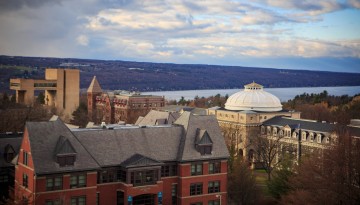
Cornell President Martha E. Pollack will deliver the annual President’s Address to Staff Oct. 10, 1-2 p.m., in the Schwartz Auditorium, Rockefeller Hall, to be followed by a Q&A period.
Historian Francis J. Gavin will discuss the importance of the 1970s in U.S. and world history in this year’s LaFeber-Silbey Lecture, Oct. 3 at 4:30 p.m. in Kaufmann Auditorium, Goldwin Smith Hall.
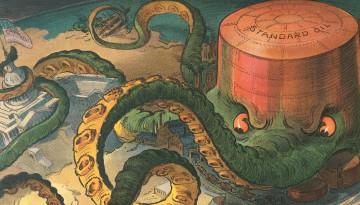
Maps with images meant to stir public sentiment are featured in the new exhibit, “Latitude: Persuasive Cartography,” which opens Oct. 3 in Carl A. Kroch Library’s Hirshland Exhibition Gallery.
Cornell and Stanford University researchers have solved the three-dimensional structure of a protein complex involved in vertebrate vision at atomic resolution.