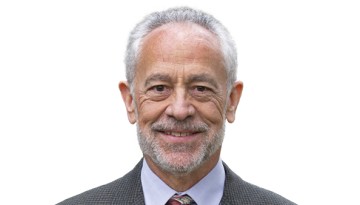
Christopher P. Dunn, PhD, executive director of Cornell Botanic Gardens, retires at the end of 2025. He led the organization into a new era of relevance to the university, community, and world, with a focused mission on conserving biological and cultural diversity.
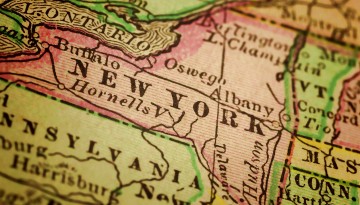
An interactive mapping tool developed by ILR School researchers enables policymakers and the public to see how billions in reduced federal funding are affecting jobs and spending across New York.
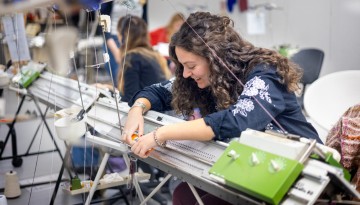
Through a series of visits to regional farms and experimentation with local wool, students in the College of Human Ecology are discovering its idiosyncrasies and charms.
Drug-injury ads are a way for law firms to obtain clients, but when people who need these drugs see the ads, they sometimes stop taking their medication, which can have serious negative consequences, a Cornell researcher found.
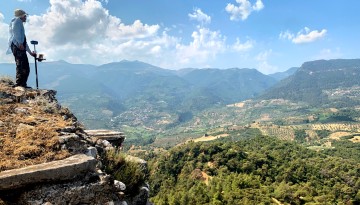
Since 1958, a collaboration between Cornell and Harvard has continuously excavated the ancient city of Sardis, Turkey, one of the longest-running projects of its kind.
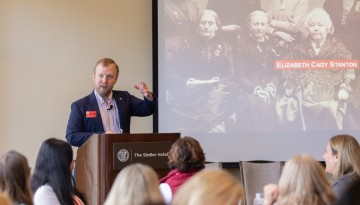
Cornell historian Corey Earle shared stories of remarkable women throughout Cornell’s history during an Oct. 25 brunch as part of the Trustee Council Annual Meeting.
Astronomers have generated the first three-dimensional map of a planet orbiting another star, revealing an atmosphere with distinct temperature zones – one so scorching that it breaks down water vapor, a team co-led by a Cornell expert reports in new research.
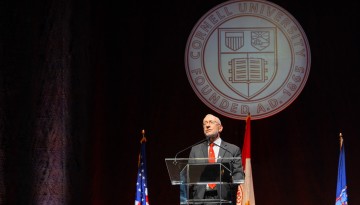
The official inauguration followed a dinner for trustees, council members and guests in Barton Hall as part of the Trustee-Council Annual Meeting schedule.