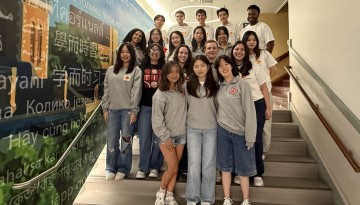
“The Future of Language Advocacy” on Nov. 15 will feature Cornell Translator Interpreter Program founders Fatema Sumar ‘01 and alumna Joyce Muchan ‘97.
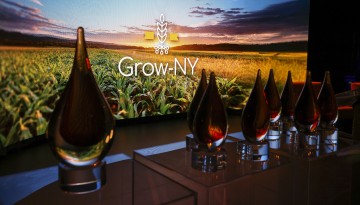
Twenty startup finalists will pitch their food and agriculture businesses – and their potential to impact upstate New York – for up to $1 million at the Grow-NY Summit, Nov. 12-13 at the Hotel Canandaigua.
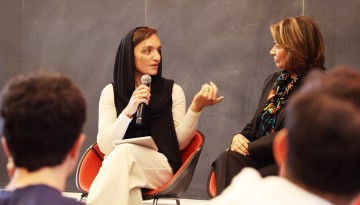
Former Costa Rican President Laura Chinchilla and Afghan human rights activist Zarifa Ghafari headlined a powerful discussion on the future of democracy during a fireside chat at Cornell University’s Brooks School of Public Policy.
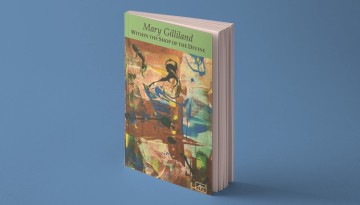
A Saint Anthony statue that glows in the dark lights the way into poems that connect people beyond death, visit holy sites, consider Satanic bargains and consult astrology.
The spread of dubious headlines on social media isn’t just a right-wing thing – it's a social media thing, according to new research from David Rand ’04, professor in the Cornell SC Johnson College of Business and at Cornell Bowers.
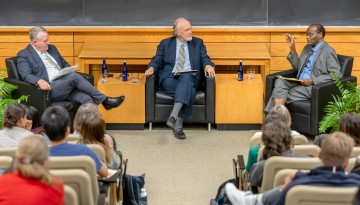
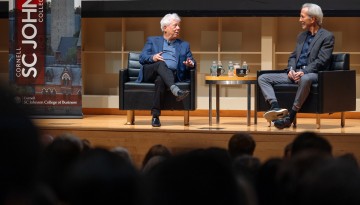
Richard Thaler, a Nobel laureate who was a professor at the Samuel Curtis Johnson Graduate School of Management from 1978 to 1995, spoke Oct. 17 at the Alice Statler Auditorium.