Newly published digital collections at Cornell University Library explore areas of Cornell history. Freely accessible online, the three new collections were digitized from materials held in Cornell University Library’s Rare and Manuscript Collections.
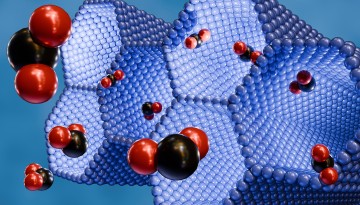
Researchers used single-molecule super-resolution reaction imaging to gain a clearer view of what happens, and where, in surface metal-hydrogen intermediates, which spark electrocatalytic transformations.
Five professors from across campus will advocate that their discipline is the most important to save for the future in the annual Apocalypse Debate, sponsored by Logos, the undergraduate philosophy journal and club.
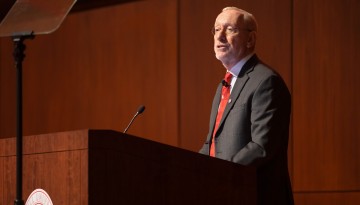
We are living in “an enormously consequential time for our university, for all of higher education and for our country,” President Michael I. Kotlikoff said in the annual State of the University address, Oct. 24 in Call Auditorium.
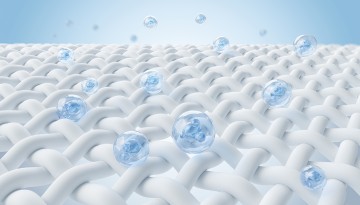
A Cornell research group has developed a cyclodextrin-based fibrous membrane that in lab testing removed approximately 90% of aqueous triclosan, an antibacterial agent that poses a threat to aquatic organisms.
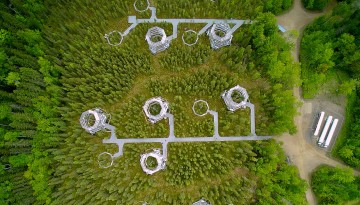
In a warming climate, extreme drought could trigger a dramatic release of carbon from peatlands, erasing up to 250 years of carbon stores in a matter of months.
A $1.8 million grant from the Bezos Earth Fund will help the Cornell Lab of Ornithology develop acoustic sensors and artificial intelligence analytics to identify real-time threats to forests from illegal activities and provide insights into ecosystem health.