J. Drew Lanham, ornithologist and professor of wildlife ecology at Clemson University, will give a talk about his nationally recognized work Dec. 4 at 7:30 p.m. in Statler Auditorium.
A museum exhibit at Ithaca’s Paleontological Research Institution – created in collaboration with Cornell experts, illustrators and students – seeks to shine a light on the vast diversity of wild bees.
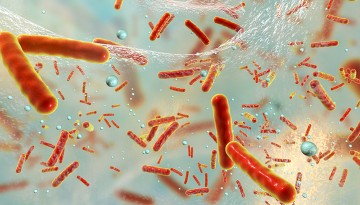
Cornell researchers have uncovered the structure of a regulatory mechanism unique to bacteria, opening the door for designing new antibiotics targeted to pathogens.
David Robertshaw, professor emeritus of physiology and an expert on water metabolism and temperature regulation in desert-adapted mammals, died Nov. 8 in Ithaca. He was 85.
Researchers at the Baker Institute for Animal Health have identified a new mechanism that plays a role in controlling how the herpes virus alternates between dormant and active stages of infection.
The Cornell Craft Beverage Institute – housed at Cornell AgriTech – offers scientific guidance to more than 1,150 craft breweries, distilleries, wineries and cideries throughout New York.
A $4.2 million project at Cornell focused on 100 Alaskan sled dogs, former athletes past their glory days, is part of a quest for one of the holy grails of medicine: how to slow aging.
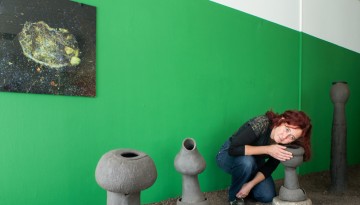
Research projects investigating the sounds of soil bring the fields of soil science, art, bioacoustics, entomology and other disciplines together, and blend creative practice with scientific inquiry.
With a grant of $2,355,000 over five years, Marcos Simoes-Costa, assistant professor of molecular biology and genetics, will investigate how the spatial complexity of an organism is generated in early development.