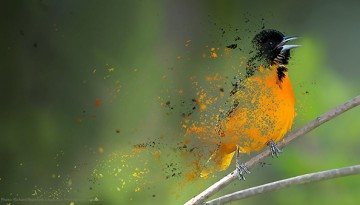
A team of scientists from seven institutions has published research that shows a massive loss of nearly 3 billion breeding adult birds since 1970, with devastating losses among birds in every biome.
To help launch the new Cornell Center for Immunology, world-renowned immunologist Mark Davis was in Ithaca to give a talk and meet faculty and students.
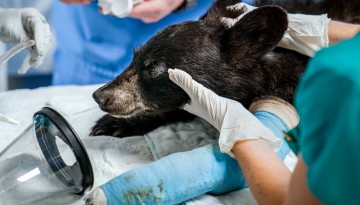
After a female black bear cub was struck by a car over the summer in the Adirondack Park, Cornell veterinary surgeons repaired the bear’s injured left foreleg and sent it on the road to recovery.
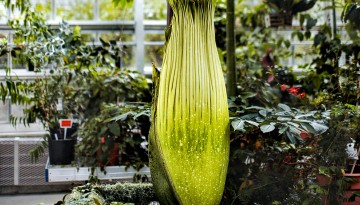
Carolus, one of Cornell’s two giant Titan arum plants, also known as “corpse flowers,” is getting ready to once again unleash its fetid odor in the Liberty Hyde Bailey Conservatory on Tower Road.
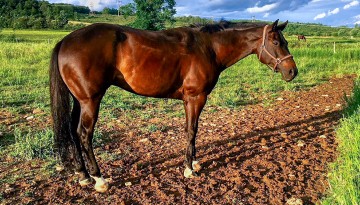
When Wrangler, an 11-year-old show horse, was diagnosed with “kissing spine,” veterinarians at the Cornell University Hospital for Animals performed surgery that got horse and rider back into the ring.
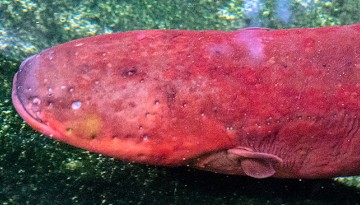
An international team of scientists has discovered two new species of electric eel, one of which delivers 860 volts; the highest level of electricity generated by any living creature.
The drawn-out process for diagnosing Lyme disease could become a thing of the past – good news for the thousands of people each year who get the tick-borne illness.
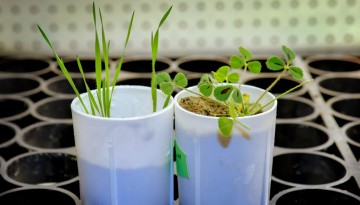
A discovery by Boyce Thompson Institute scientists could help farmers improve phosphate capture, potentially reducing the environmental harm associated with fertilization.