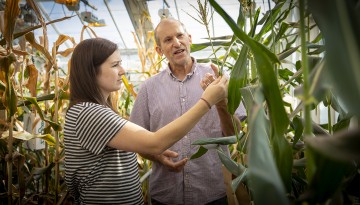
Wojtek Pawlowski, associate professor of plant breeding and genetics, is partnering with French biotech company Meiogenix, with the goal of more effectively engineering maize, the world’s top staple crop.
Angela Poole, assistant professor of nutritional sciences, and Gerlinde Van de Walle, associate professor of microbiology and immunology, have both been awarded $25,000 each to launch or support research.
A group of researchers led by adjunct professor David Stern, president of the Boyce Thompson Institute, has developed a type of corn that is chill-resistant, which could increase growing area and productivity.
Undergraduates can now apply for the new Science Communication and Public Engagement minor, designed to prepare students to be socially engaged scientists who can clearly communicate their findings.
Cornell has signed on with the Institute for Research on Innovation and Science, a consortium of America’s leading higher education institutions focused on demonstrating the public value of research.
New Cornell research indicates facial recognition abilities in wasps evolved relatively rapidly suggesting their increasing intelligence provided an incredible evolutionary advantage.
David Pimentel, Ph.D. ‘51, professor emeritus of agricultural sciences, entomology and ecology, and an influential champion for the environment, died Dec. 8 in Ithaca. He was 94.
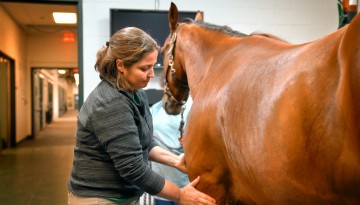
Recent multidisciplinary research at Cornell, led by Dr. Michelle Delco from the College of Veterinary Medicine, reveals that the application of a proprietary peptide may protect cartilage from osteoarthritis.