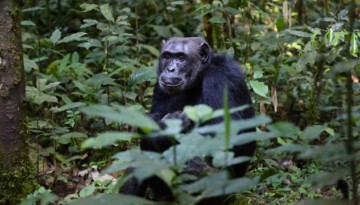
“Apes and Sustainability,” a forum held Nov. 15, brought together Cornell faculty, activists and scientists to explore new perspectives on preserving nonhuman great apes in sustainable ways.
Temple Grandin, the prominent author on autism and animal behavior, visited Cornell Nov. 13 to share her perspective on animal behavior and livestock husbandry.
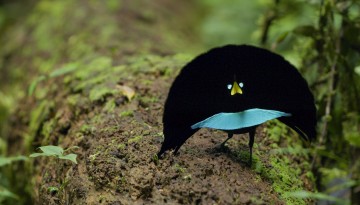
New research suggests for the first time that everything in those male birds-of-paradise theatrical breeding displays is driven by one thing: the female.
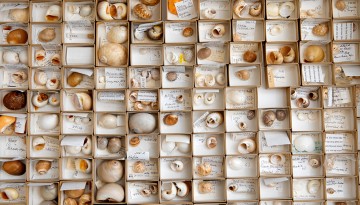
Cornell’s Malacology Collection will get new life online when it is donated to the Paleontological Research Institution, which plans to digitize it and make it available to researchers around the world.
Twenty-six Cornell graduate students have won more than $42,000 in fall 2018 Research Travel Grants, which provide students up to $2,000 to conduct thesis or dissertation research.
This year's AAAS electees from Cornell include a renowned artificial intelligence researcher, an emeritus professor who studies animal migration patterns, and a food safety expert.
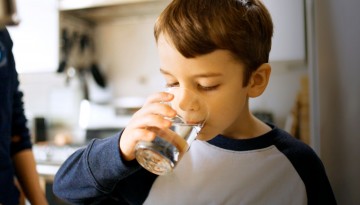
Millions of times each day, New Yorkers turn on the faucet, relying on water supplied from about 125 miles away in the Catskill Mountains. Cornell expertise helps to keep the award-winning water pristine.
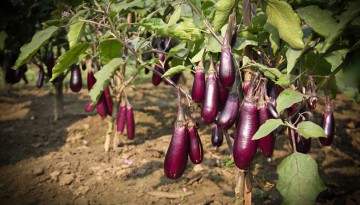
Replicated field trials comparing genetically modified eggplant with their non-GM counterparts in Bangladesh have confirmed the Bt gene confers almost total protection against pests.