Richard Stup, an agricultural workforce specialist in the College of Agriculture and Life Sciences, is working on ways to help New York state’s farmers tackle workforce issues.
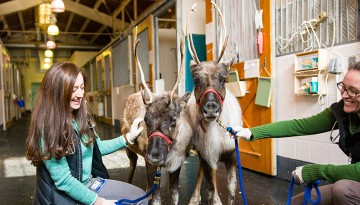
A year after a devastating illness brought reindeer Little Buddy to the Cornell University Equine and Nemo Farm Animal Hospital, the young reindeer is now back to full health and already embracing the holiday season.
A slight modification to an existing RNA sequencing technique, developed in the lab of assistant professor Iwijn De Vlaminck, will allow a greater variety of molecules to be analyzed.
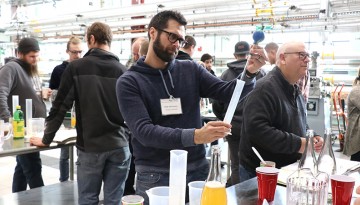
The Cider and Perry Production: Science & Practice course, held at Cornell AgriTech Dec. 3-7 drew hard cider producers from around the country to Geneva.
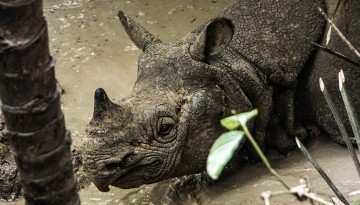
Montana Stone ’19 is collaborating with the Lab of Ornithology to document the vocalizations of the endangered Javan rhino, part of an effort to save the species.
The College of Veterinary Medicine will be the official veterinary care providers for the 143rd annual Westminster Dog Show, Feb. 11-13 in New York City.