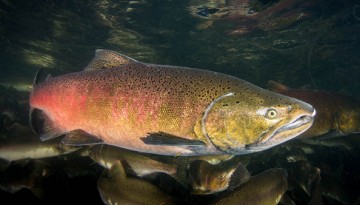
Advanced pop-off satellite tags developed by Cornell researchers and attached to the king salmon in Lake Ontario map the movements and feeding behavior in of the valuable fish.
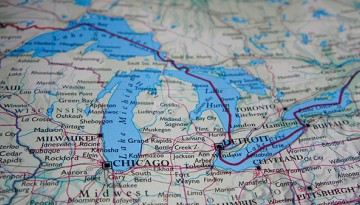
A regional consortium that includes Cornell is collaborating to preserve the Great Lakes thanks to a five-year, $20 million grant from the U.S. National Oceanic and Atmospheric Administration.
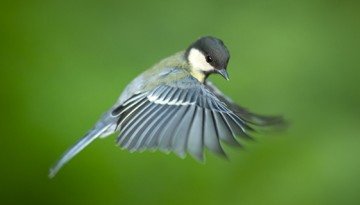
A new study considers whether the mass extinction that killed off the dinosaurs led to a temporary acceleration in the rate of genetic evolution among its avian survivors.
A team of Cornell scientists, led by Nina Bassuk, professor in the Horticulture Section of the School of Integrative Plant Science, is working to preserve the elms on the National Mall in Washington, D.C., for generations to come.
Two papers prove for the first time how single master genes – one for colors and iridescence and the other for stripe patterns – control these complex traits in butterfly wings.
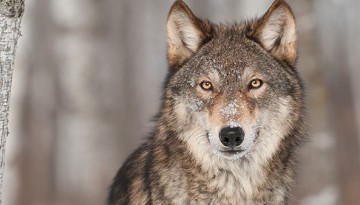
In an effort to settle the debate about the origin of dog domestication, a technique that uses 3-D scans of fossils is helping researchers determine the difference between dogs and wolves.
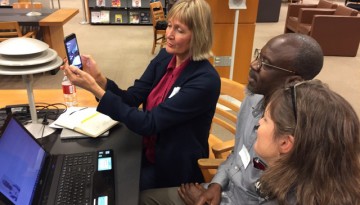
Knowledge Matters, a workshop series designed for Cornell faculty members and academic staff, is helping participants translate their research into a variety of digital media platforms.