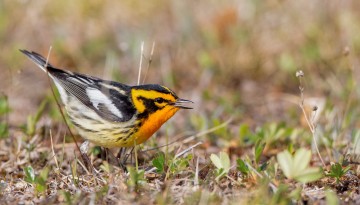
More than 80% of global land area needed to maintain human well-being and meet biodiversity targets is at risk of conflict with human development, according to a new study led by the Cornell Lab of Ornithology.
With new funding from the National Institutes of Health (NIH), Cornell faculty will investigate how SBHCs are not only leaving a positive impact on students, but also on the wider community’s well-being and public services across four counties in upstate New York.
A new study – using lab mice genetically modified with a human gene to shed light on a potential link between arsenic exposure and diabetes – revealed that while the male mice exposed to arsenic in drinking water developed diabetes, the female mice did not.
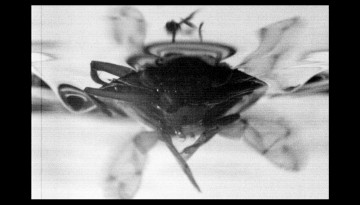
Whirligig beetles – the world’s fastest-swimming insect – achieve surprising speeds by employing a strategy shared by fast-swimming marine mammals and water fowl.
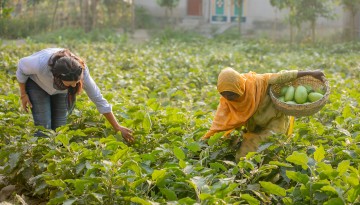
A new FAO book highlights agricultural biotechnologies used to serve the needs of smallholders in developing countries and features a case study on Bt eggplant, the first bioengineered food crop approved in South Asia.
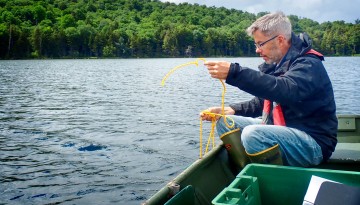
Climate warming and lake browning – when dissolved organic matter turns the water tea-brown – are making the bottom of most lakes in the Adirondacks unlivable for cold water species such as trout, salmon and whitefish during the summer.
In a paper co-authored by Mario Herrero, professor and director of the Food Systems & Global Change program, the first science-based monitoring of global agriculture and food systems is being used to provide equitable access to healthy diets through sustainable food systems.