Surveys tease apart how cat owners’ and veterinarians’ views may each be contributing to overuse of the only long-acting, injectable antimicrobial for use in cats, called cefovecin.
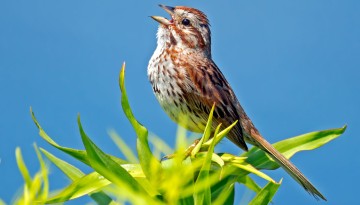
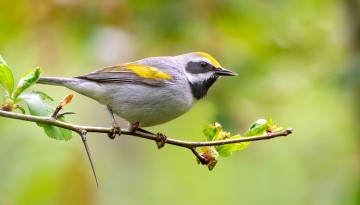
North American song sparrows may be more resilient to climate change thanks to a remarkable adaptation: a stunning range of body sizes found throughout the bird’s westernmost range.
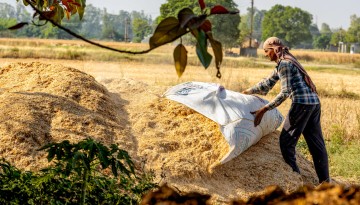
New maps, made from a global dataset of crop residues, reveal areas where biochar may be sustainably produced, offering a path to lowering atmospheric carbon dioxide, a greenhouse gas.
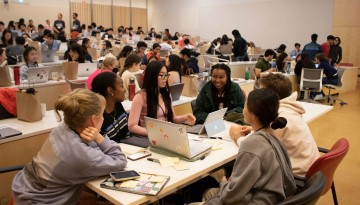
Students were tasked with addressing one of four challenges: creating new dairy products, coming up with more efficient food manufacturing processes, lessening the problem of food waste or creating products to increase knowledge and the use of honey and other bee-pollinated products.
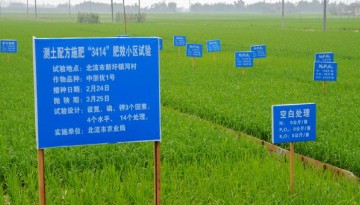
A new paper shows that promised yield increases at a global scale from increasing organic carbon in soils would be negligible with current technologies and optimal management practices.
Cornell faculty members have until Monday, Nov. 27, to submit nominations of distinguished scholars in the areas of arts, life sciences, and social sciences for the A.D. White Professors-at-Large Program.
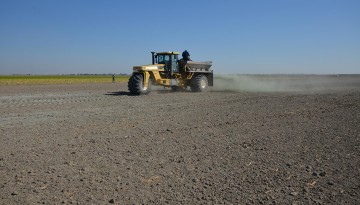
Adding crushed volcanic rock to cropland could play a key role in removing carbon from the air. In a field study, scientists at the University of California, Davis, and Cornell University found the technology stored carbon in the soil even during an extreme drought in California.
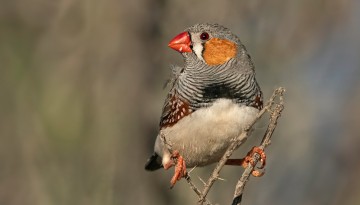
The collaboration aims for a breakthrough in understanding the neural mechanisms by which parental animals balance their own needs with the needs of their offspring.