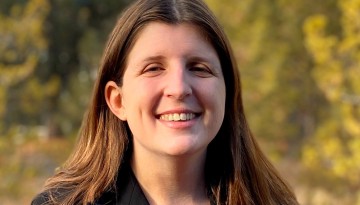
Emma Pierson, assistant professor of computer science at the Jacobs Technion-Cornell Institute at Cornell Tech, has been awarded an AI2050 Early Career Fellowship from Schmidt Sciences for her work seeking to use AI to promote equity.
Cornell Tech has launched a new digital guide highlighting the many cultural attributes of its campus on Bloomberg Connects, the free arts and cultural app created by Bloomberg Philanthropies.
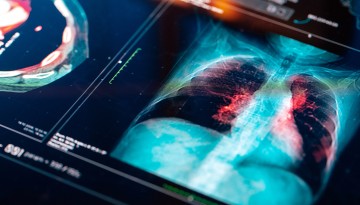
A new study has identified a set of 140 genes that may help predict enhanced disease-free survival in patients with non-small-cell lung cancer treated with a combination of immunotherapy and low-dose radiation.
Weill Cornell researchers find inflammatory bowel disease drug works by modulating the activity of a group of gut bacteria that are more abundant in patients who respond to the drug.
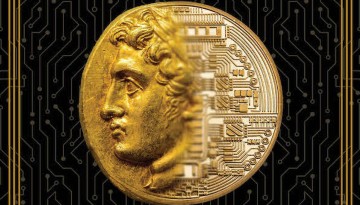
A confluence of events, combined with a healthy obsession for details and a love of writing, gave Cornell Tech computer scientist Ari Juels just what he needed to produce his second fiction thriller, “The Oracle.”
An experimental mRNA vaccine against human cytomegalovirus, a common virus that can infect babies during pregnancy, elicited some of the most promising immune responses to date of any vaccine candidate, according to a study by Weill Cornell Medicine investigators.
A multicenter, phase 3 clinical trial has found that apixaban is no more effective than aspirin at preventing a second stroke in patients diagnosed with a milder, related condition called atrial cardiopathy, according to new research.
Alessio Accardi, professor of physiology and biophysics in anesthesiology at Weill Cornell Medicine, has been awarded a five-year, $2.7 million grant for fundamental research on cell membrane proteins that have critical roles in biology and are involved in numerous human diseases.