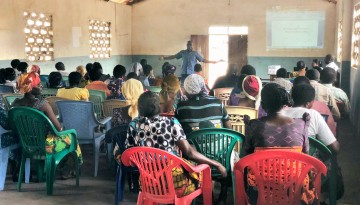
An intercampus collaboration that aims to provide digital health care tools to pregnant refugee women, who are at elevated risk for pregnancy complications but often afraid to seek medical care, has been awarded a National Academy of Medicine Catalyst Prize.
Removing race information from cardiovascular risk calculators – which predict the probability of developing heart disease – doesn’t affect patients’ risk scores, according to a study by Weill Cornell Medicine and NewYork-Presbyterian investigators.
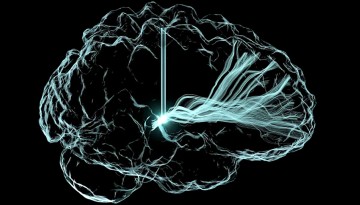
Five people who had life-altering, seemingly irreversible cognitive deficits following moderate to severe traumatic brain injuries showed substantial improvements in their cognition and quality of life after receiving an experimental form of deep brain stimulation in a phase 1 clinical trial.
Researchers from Cornell Tech have developed a method to identify delays in the reporting of incidents such as downed trees and power lines, which could lead to practical insights and interventions for more equitable, efficient government service.
Researchers have demonstrated the use of artificial-intelligence-selected natural images and AI-generated synthetic images as neuroscientific tools for probing the visual processing areas of the brain.
Weill Cornell Medicine is dramatically expanding its campus and research footprint in New York City by securing five floors of 1334 York Ave., the current home of Sotheby's auction house.
The ILR School’s Climate Jobs Institute will share its new report, “Building an Equitable, Diverse and Unionized Clean Energy Economy: What We Can Learn from Apprenticeship Readiness,” at an in-person and online event on Nov. 30.
A Weill Cornell Medicine-led research team used an AI-based approach to uncover patterns among conditions in which people are born, grow, work and age, called social determinants of health, and then linked each pattern to children’s health outcomes.