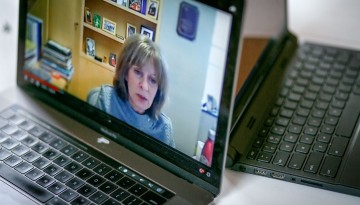
In a virtual forum March 18 with the Employee Assembly, Opperman praised Cornell staff’s resilience as the university takes steps to respond to the COVID-19 pandemic, including asking many employees to work remotely.
Giving Day, March 12, brought generous Cornell community members together from around the world to raise more than $7 million – including emergency funds in response to the coronavirus epidemic.
More than 150 attendees – including Cornell alumni and students from the classes of 1967 through 2022 – converged in New York City on March 5 for the inaugural Women in Entrepreneurship Conference.
A recent Cornell Tech alumnus is applying his health tech skills to a crowdsourcing app that allows users to share their COVID status, to better inform individuals and health authorities.
President Martha E. Pollack shared her thoughts March 17 on the many challenges Cornellians are facing around the world due to the coronavirus pandemic.
Cornell President Martha E. Pollack announced that all classes on the Ithaca campus will be suspended for three weeks effective March 13 at 5 p.m. Virtual instruction will begin April 6. Students are strongly encouraged to return to their permanent home residences as soon as feasible.
Cornell is embarking on an unprecedented effort to shift to online instruction for the rest of the semester following spring break – employing innovative measures to maximize learning and research while limiting the spread of COVID-19, the novel coronavirus disease.
In a message to the community, Cornell President Martha E. Pollack responded to questions students had raised following the decision to switch to virtual instruction.
President Martha E. Pollack announced that the university is moving to virtual instruction, and students are being asked to stay at their homes after spring break. In addition, new restrictions on travel, events and visitors have been implemented.