Weill Cornell Medicine investigators have developed a technique to help surgeons reconstruct more natural-looking nipples for patients who have undergone breast reconstruction after mastectomy to treat breast cancer.
A new center for entrepreneurship – operating both in Ithaca and on the Cornell Tech campus in New York City – will deepen Cornell Law School’s commitment to supporting entrepreneurship initiatives through clinical education.
Human assumptions regarding language usage can lead to flawed judgments of whether language was AI- or human-generated, Cornell Tech and Stanford researchers found in a series of experiments.
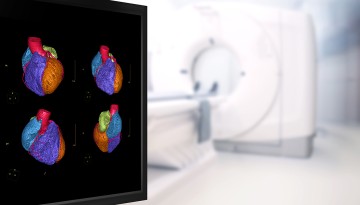
Compared with men, women continue to have a roughly 30-40% higher risk of dying following coronary artery bypass surgery, according to a large study led by investigators at Weill Cornell Medicine and NewYork-Presbyterian/Weill Cornell Medical Center.
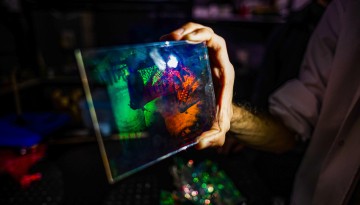
A yearslong effort to launch Cornell-made satellite technology into a neighboring solar system is making a terrestrial stop at the Intrepid Sea, Air and Space Museum in New York City with a new exhibit: “Postcards from Earth: Holograms on an Interstellar Journey.”
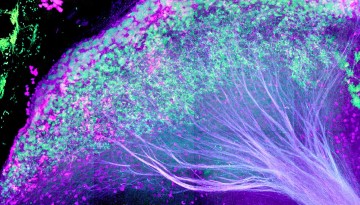
A small but significant metabolic difference between human and mouse lung tumor cells has been discovered by Weill Cornell Medicine researchers, explaining a discrepancy in previous study results and pointing toward new strategies for developing cancer treatments.
Weill Cornell Medicine has been awarded a five-year, $4.2 million grant by the National Cancer Institute to investigate the molecular mechanisms by which immune cells interact with Epstein-Barr virus to cause lymphoma, particularly in people living with HIV.
As sea levels rise over the next decades for low-lying Hudson River towns, Cornell landscape architecture students offered ideas for coping with climate change and embracing the water.