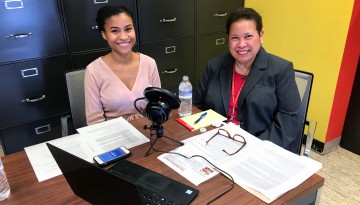
Pauline Flaum-Dunoyer has interviewed more than a dozen women physicians of color, and donated the recordings and transcripts to NewYork-Presbyterian/Weill Cornell Medicine, where their legacies will be preserved for future generations.
There will soon be a second “Feeney Way” at Cornell: a central thoroughfare at Cornell Tech to be named in honor of the transformative impact and legacy of Charles F. “Chuck” Feeney ’56, the university’s most generous donor.
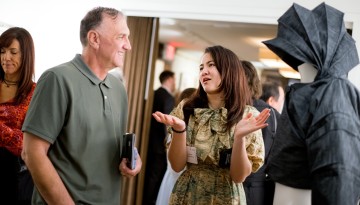
The College of Human Ecology’s first Cornell Fashion Expo, held April 14, gave student designers a chance to present their work to industry experts and Cornell alumni in New York City, one of the fashion capitals of the world.
Strokes cause changes in gene activity in affected small blood vessels in the brain, changes that may be targetable with existing or future drugs to mitigate brain injury or improve stroke recovery, according to Weill Cornell Medicine scientists.
Members of the Cornell entrepreneurial community gathered to celebrate a successful first year of the BioEntrepreneurship Initiative at the program’s culminating workshop on March 18 in Midtown Manhattan.
People with autism spectrum disorder can be classified into four distinct subtypes based on their brain activity and behavior, according to a study from Weill Cornell Medicine investigators.
A team has identified an antibody that appears to block infection by all dominant variants of the virus that causes COVID-19, including omicron. Their discovery could lead to more potent vaccines and new antibody-based treatments.