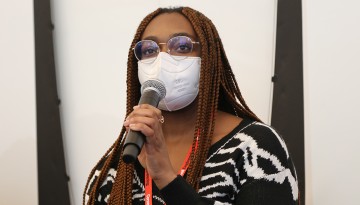
A summit hosted at Cornell Tech on Feb. 28 brought together more than 50 principals, guidance counselors, students and leaders from community-based organizations to discuss how to grow Cornell’s Bridge Scholars program from a successful pilot initiative into a nation-wide collaborative.
Lindsey Ruff '19 was recognized for her instrumental work on a clinic case involving the free speech rights of death penalty lawyers in South Carolina that is now pending before the U.S. Court of Appeals for the Tenth Circuit.
Anti-Mullerian hormone, traditionally thought of as a passive byproduct of polycystic ovary syndrome, may actually play an active role in the disorder, according to new research.
When we think of having our own handy multi-purpose robots, we tend to picture something out of Star Wars or The Jetsons — but the useful technology of the ‘future’ may not be as far off as we think. Maria Bauza Villalonga, PhD student at MIT, hosted a Seminar @ Cornell Tech to show how robots can become our best allies.
Investigators from Weill Cornell Medicine and Memorial Sloan Kettering Cancer Center have discovered how a drug for multiple sclerosis interacts with its targets, a finding that may pave the way for better treatments.
Anesthesiology prices jump significantly after medical facilities contract with corporate physician management companies – especially those backed by private equity firms – and threaten to hike patient costs, according to new research.
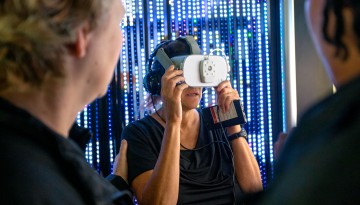
Powering augmented and virtual reality technologies to tackle real-world problems is the focus of a two-year, $1.8 million grant from Meta and Spark AR to Cornell Bowers CIS and Cornell Tech’s XR Collaboratory.
Cornell researchers have created the most advanced virtual reality urban farm tour ever made, an online learning experience that promises to transport urban and rural farmers to New York City’s Red Hook Farms without ever leaving home.