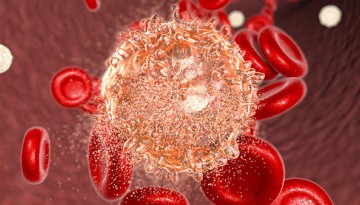
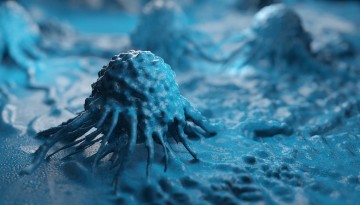
Genetically engineered immune cells successfully target the specific cancer cells that may be responsible for relapse of acute myeloid leukemia, according to a preclinical study by investigators at Weill Cornell Medicine.
The Weill Cornell Medicine research takes a step toward precision medicine for a type of cancer that disproportionately affects people with African ancestry, an underserved population.
Cornell Tech awarded four student startup companies with pre-seed funding worth up to $100,000 in its ninth annual Startup Awards competition. A fifth company won a new startup award focused on public-interest technology.
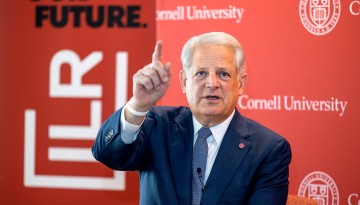
Charles R. Lee was one of the university’s most active and generous ambassadors, and a tireless advocate for deeper connections across Cornell’s campuses and alumni communities.
To address the fragility of American democracy, the Institute of Politics and Global Affairs at the Cornell Jeb E. Brooks School of Public Policy is bringing together influential political leaders, policymakers and experts for a May 24 summit.
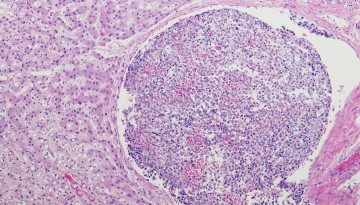
Tumors can force neighboring cells into supporting cancer growth by releasing lactate into their local environment, according to researchers at Weill Cornell Medicine. The findings pave the way for future drug treatments that thwart that defense mechanism to help cancer patients.
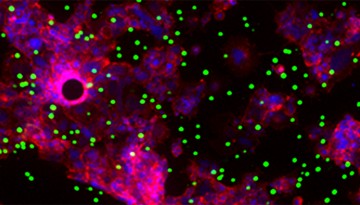
A protein called CDC7, long thought to play an essential role early in the cell division process, is in fact replaceable by another protein called CDK1, according to a study by investigators at Weill Cornell Medicine and the Dana Farber Cancer Institute.
An agricultural economist, a theoretical physicist, a plant biologist and a physiologist have each been elected to the National Academy of Sciences, the academy announced May 3.