Israel Cidon, former dean of the Andrew and Erna Viterbi Faculty of Electrical and Computer Engineering at Technion-Israel Institute of Technology, has joined Cornell Tech as director of the Joan and Irwin Jacobs Technion-Cornell Institute.
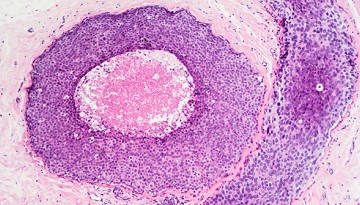
Researchers at Weill Cornell Medicine have found that radiation therapy combined with two types of immunotherapy can control tumors in preclinical models of triple-negative breast cancer, which is typically resistant to immunotherapy alone.
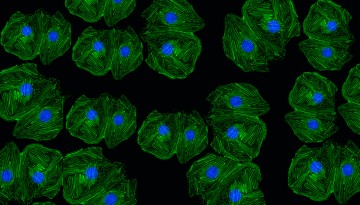
Craniosynostosis, the premature fusion of the top of the skull in infants, is caused by an abnormal excess of a previously unknown type of bone-forming stem cell, according to a preclinical study led by researchers at Weill Cornell Medicine.
Weill Cornell Medicine has been awarded a five-year, $5 million grant from the U.S. Department of Health and Human Services to study whether a bilingual video game can increase the use of contraception among Black and Hispanic adolescents.
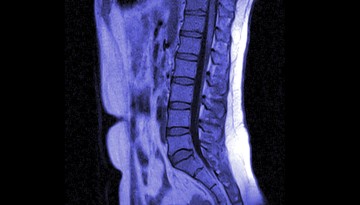
The bones that form the spine are derived from a distinct type of stem cell that secretes a protein favoring tumor metastases, according to researchers at Weill Cornell Medicine, a discovery that opens up a new line of research on spinal disorders.
Incorporating sustainability into their field, Cornell information science researchers Ilan Mandel and Wendy Ju introduce “garbatrage,” a framework for prototype builders centered around repurposing underused devices.
Cornell University’s Life Sciences Technology Innovation Fellowship, formerly known as the BioEntrepreneurship Initiative, enters its second year in 2023-24 with a new cohort of 15 business students and 12 researchers.